

Tesla Certified Installer
Tesla Wall Connector vs NEMA 14-50 Outlet
Compare a hardwired Tesla Wall Connector with a NEMA 14-50 receptacle for charging speed, portability, circuit design, maintenance, and daily use.
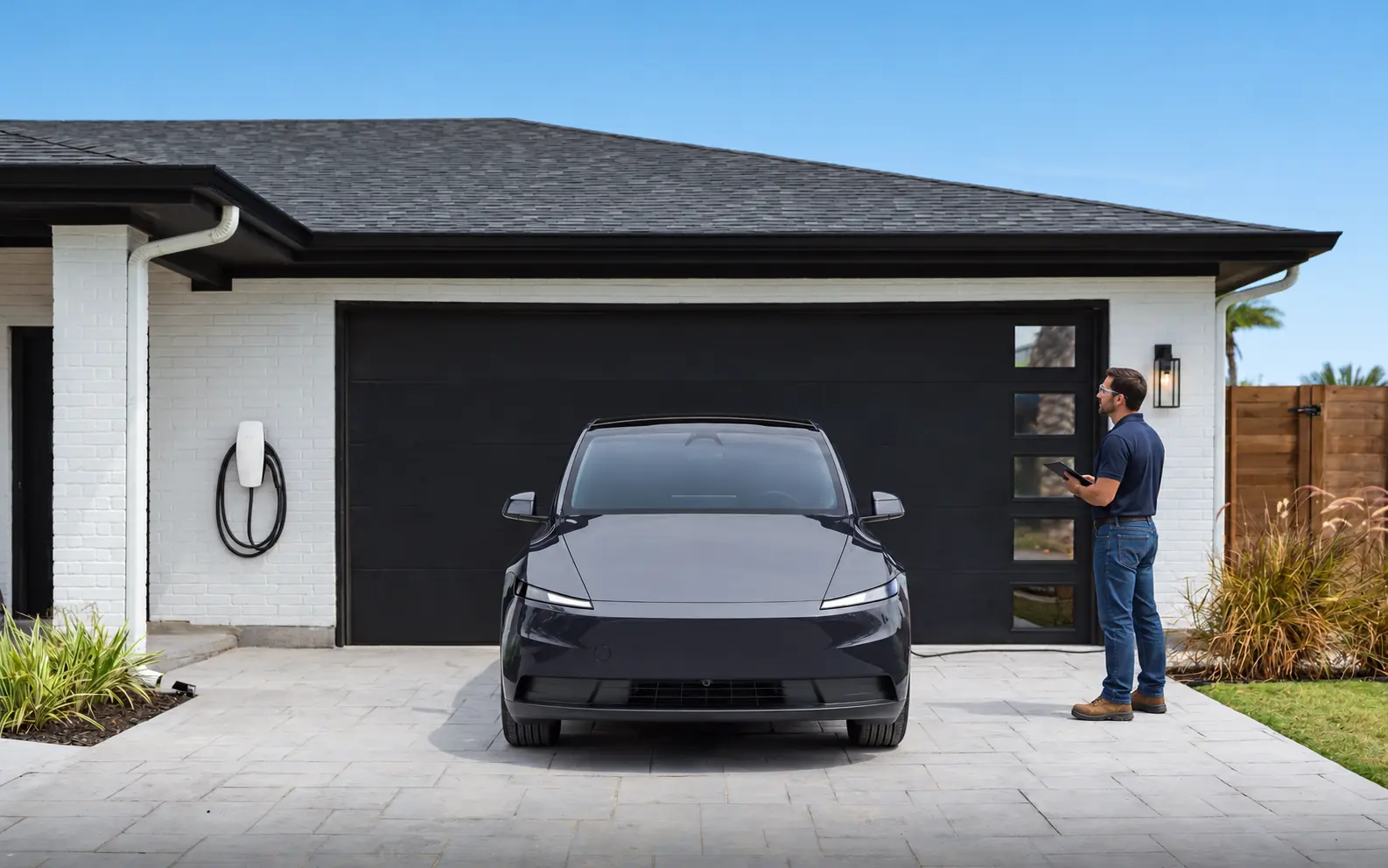
This article is general education, not electrical design or do-it-yourself instructions. A qualified professional must assess the property and applicable requirements.
The Tesla Wall Connector vs NEMA 14-50 choice is a comparison between two complete charging arrangements, not just two purchase prices. Hardwired equipment and a receptacle-based mobile setup differ in daily handling, connections, portability, maintenance and supported features. The home’s electrical design and the vehicle’s real energy need still determine the appropriate installation.
The comparison is between a dedicated hardwired charging system and a receptacle-based portable arrangement, each with different connections, usage and maintenance. Vehicle needs, environment, daily handling and electrical design should guide the choice.
Compare complete charging systems, not two pieces of hardware
A Wall Connector installation includes a hardwired EV supply circuit, mounted charging equipment, and commissioning. A NEMA 14-50 approach includes a receptacle circuit plus compatible portable charging equipment. Comparing only the Wall Connector price with the receptacle price leaves out the mobile connector, receptacle quality, enclosure, cord arrangement, and charging limits. Ask for two complete scopes built around the same daily charging target.
Vehicle capability limits both options. A circuit advertised at a particular ampere rating does not mean every car accepts that AC rate. Document the vehicle model, charging equipment, circuit, and configured current. The useful comparison is how much energy the supported system can add during the hours the car is normally parked.
Hardwiring changes connection points and daily handling
A hardwired Wall Connector eliminates the plug-and-receptacle interface used by portable equipment. It remains mounted and ready, so drivers handle only the vehicle connector. That can be convenient for daily charging and outdoor locations. The wiring still needs correct protection, terminations, mounting, commissioning, and inspection.
A 14-50 receptacle allows charging equipment to be unplugged, replaced, or carried, but regular insertion and removal can wear the connection. Cord weight and plug orientation matter. The electrician should select equipment suitable for EV charging and the environment, while the owner should follow the charger manufacturer’s instructions rather than using extension cords or improvised adapters.
Installation environment can decide the better approach
In a clean private garage, either design may be practical after assessment. Outdoors, in a shared space, or where the plug can be struck or exposed, a hardwired method may simplify weather and access planning. A receptacle installation needs an enclosure and arrangement suitable for the location, plus space for the charging brick and cord without creating a trip hazard.
Think about theft, accidental unplugging, children, storage, and how a garage door moves. A portable connector that never leaves the wall may provide little portability benefit. Conversely, a renter who must remove equipment later may value a receptacle if the owner and electrical design permit it.
Charging current and protection must follow the installed design
Wall Connector current is set during commissioning to correspond with the branch circuit. Receptacle-based equipment typically communicates its own supported current, but the circuit, receptacle, plug, and charging device must still form an approved combination. Homeowners should not infer safe current from outlet shape or change adapters to obtain more power.
Ask the electrician to state the breaker, conductor, receptacle or charger model, and expected current in the proposal. If ground-fault protection or other requirements apply, include them. A breaker that trips repeatedly is a signal to stop and diagnose, not to replace protection with a different rating.
Use future flexibility carefully
A receptacle can make some equipment swaps easier, while a Wall Connector can offer Tesla app features, access controls, and supported power-management options. Future vehicles may use different inlets but can also be served by equipment designed for the emerging connector mix. Predicting standards should not replace designing for current vehicles and safe infrastructure.
If conversion is likely, ask whether the route and conductors could support an approved future hardwired configuration. Do not promise reuse without an assessment because conductor count, size, condition, terminations, and circuit requirements can differ. Record the installed route so a later electrician can evaluate it.
Compare both options as installed systems
Ask for comparable proposals that address equipment or receptacle responsibility, circuit rating, conductor route, breaker and protection, mounting or box, commissioning where applicable, labeling, testing and permit work. Each bidder should identify exact components and design assumptions so one option is not made to look cheaper by omitting part of the installed system.
Watch for treating every 14-50 receptacle as equivalent, selecting current from plug shape or comparing prices that omit equipment and protection differences. If component grades or the mobile connector are not specified, the outlet quote is not ready for a fair comparison. Require exact assumptions for both installed options.
Whichever option is chosen, explain the approved charging setting, daily connection routine, inspection status, maintenance considerations and changes that require an electrician. Save the exact component information. A mobile connector, Tesla Wall Connector and electrical installation may each have a different support or warranty path.
Prepare one charging brief for both options
Provide the vehicle’s charging capability, daily mileage, mobile connector details, portability preference, garage or outdoor conditions, known panel information and future EV plan. Show the parking position and cable path in a safe photograph. The electrician should inspect circuit capacity and proposed receptacle or hardwired components instead of relying on the plug appearance.
Ask the electrician to compare continuous-use component selection, enclosure and mounting, hardwired commissioning and local inspection steps. Verify the contracting license for the address. If Tesla status is presented, confirm what product it covers; then separately confirm the company can supply and support the exact outlet or Wall Connector option quoted.
Compare both options against the same weekly charging target and the same property assessment. Request service with the vehicle and address or review Tesla Wall Connector installation. Confirm the electrical provider, component responsibility, product support, availability and finished price for each alternative before choosing.
Review the chosen system at handoff
Compare complete scopes: equipment, circuit rating, connection method, enclosure or receptacle, outdoor exposure, plug cycles, cable management, permit, testing and future use. Do not compare a fully commissioned Wall Connector proposal with an outlet price that excludes charging equipment.
Price two complete charging systems rather than comparing a Wall Connector invoice with an empty receptacle. The hardwired option should name the Wall Connector, circuit design, configured current, connected setup and charging demonstration. The plug-in option should identify the exact receptacle and enclosure, circuit design, compatible mobile charging equipment and permitted charging setting. Both scopes need the same route, protection, permit, labeling, testing and restoration boundaries. Tesla's current instructions for the selected charging equipment should guide use; a 14-50 face shape alone does not establish the sustained load, component quality or vehicle charging rate. This side-by-side definition exposes whether an apparent saving simply moves equipment or installation responsibility outside the quote.
Bring the vehicle’s charging capability, typical mileage, existing mobile connector equipment, portability preference, garage or outdoor conditions and future EV plans to the assessment. Park normally so reach and storage can be compared. The electrician should verify panel capacity, circuit details, receptacle components and protection; those conclusions should not come from a homeowner inspection.
For either option, require a normal charging demonstration and a record of the circuit rating, permitted charging setting, connection routine, inspection status and maintenance considerations. The owner should know which changes require an electrician and where product and workmanship support begin and end. That handoff makes the two choices comparable after installation, not only at bid time.
Do not compare placeholder hardware. If the receptacle grade, enclosure, mobile connector, Wall Connector model, circuit setting, protection or route is still unknown, list it explicitly and identify who will select it. Resolve those components before comparing totals; otherwise the alternatives may represent different charging performance or durability rather than a fair Wall Connector-versus-outlet choice.
Compare repeated connections with a fixed connection
A receptacle-based setup introduces a plug-and-receptacle connection that may be handled more often, while a hardwired Wall Connector removes that interface but fixes the equipment to the property. Discuss how often the mobile connector would be unplugged, whether it must travel with the vehicle and how the outlet location protects the cord from strain or impact. Ask the electrician what inspection or maintenance is appropriate for the selected components and usage. This practical handling comparison may matter more than a small difference in advertised output, particularly when the vehicle remains parked long enough each night to recover its normal daily energy use.
Frequently asked questions
Which option charges faster?
Charging speed depends on the vehicle, charging equipment, circuit design and configured current. Compare the supported complete configurations for your property.
Is a receptacle more portable?
A receptacle can support removable charging equipment, but portability should be weighed against daily plugging, equipment storage and installation conditions.
Is hardwiring required outdoors?
Follow current equipment instructions and applicable requirements for the location. Ask the electrician to explain the permitted outdoor approach.
Can I convert a 14-50 circuit to Wall Connector later?
Possibly, but conductor size, circuit configuration, equipment location and existing work must be assessed before reuse.
Should I choose based on resale?
Resale is uncertain. Prioritize safe, documented charging that meets current needs while considering practical future flexibility.
Sources
Request a property-specific assessment
Share the address, equipment and project goal. The service team can confirm the next step and proposed provider qualifications.
More from the learning center
Continue reading.
Related guides for the next decision.
Cable Routing for a Tesla Charger Installation
Compare Tesla charger cable routes through garages, attics, crawlspaces, exterior walls, and underground paths while planning access and restoration.
Read the articleDo I Need a Panel Upgrade for a Tesla Wall Connector?
Find out how electricians evaluate panel capacity for a Tesla Wall Connector and when load management, a smaller circuit, or panel work may be considered.
Read the articleGen 3 Tesla Wall Connector Installation Planning
Plan a Gen 3 Tesla Wall Connector project around the circuit, mounting location, connectivity, commissioning, power sharing, and future charging needs.
Read the article