

Tesla Certified Installer
Tesla Wall Connector Troubleshooting: When to Call an Installer
Use safe Tesla Wall Connector troubleshooting steps, understand status indicators, separate vehicle and supply issues, and know when to call an electrician.
This article is general education, not electrical design or do-it-yourself instructions. A qualified professional must assess the property and applicable requirements.
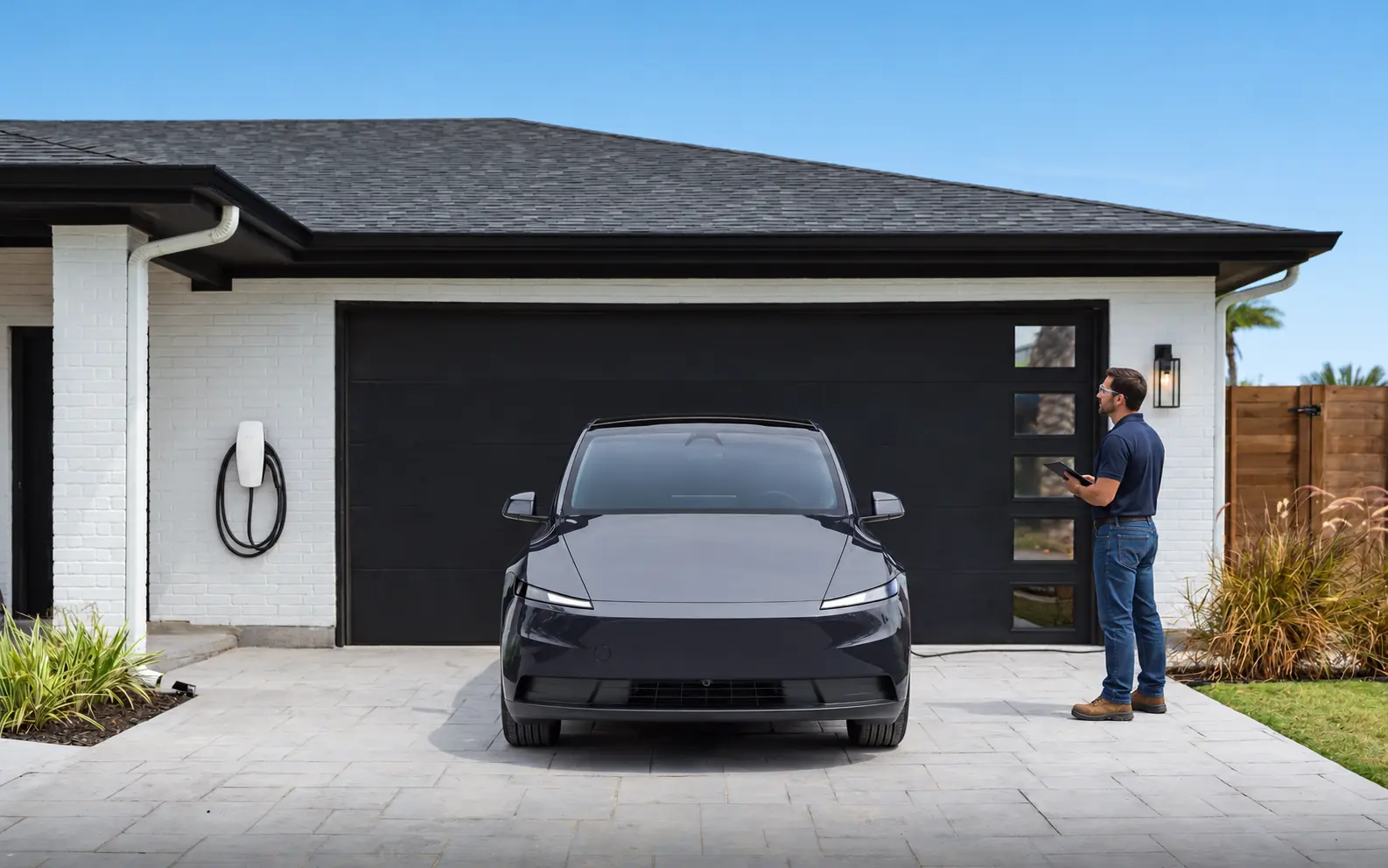
Safe Tesla Wall Connector troubleshooting begins with observations, not disassembly. The vehicle message, indicator pattern, time of failure, weather, network status and whether another charging source works can help route the problem. This guide separates owner-safe checks from conditions that call for Tesla support, the original installer or a qualified electrician.
Troubleshooting starts by separating owner-safe observations from electrical or product diagnosis. Vehicle messages, Wall Connector indicators, network status and the time of failure help route the case without opening equipment or repeatedly resetting a fault.
Triage from a safe distance
Start with visible indicators, the Tesla app or vehicle message, the time the problem occurred, and whether the condition repeats. Note recent outages, storms, construction, network changes, vehicle updates, or electrical work. Photograph the Wall Connector and surrounding area without removing covers. Avoid touching equipment that is hot, wet, damaged, buzzing, or producing odor.
Consult Tesla’s current troubleshooting guidance for the exact indicator pattern. Owner-directed steps can help distinguish a temporary communication issue from a condition that needs service. Do not substitute forum instructions for the product manual, and do not defeat a breaker or safety device to keep charging.
Separate vehicle symptoms from site symptoms
Check whether the vehicle charges at another known compatible source and whether another supported vehicle charges at the affected Wall Connector, when those comparisons are safely available. Vehicle charge limits, schedules, temperature, inlet issues, and software messages can resemble a charger failure. Record results rather than repeatedly connecting and disconnecting.
If multiple vehicles fail at the same unit, the Wall Connector, circuit, configuration, or supply becomes more likely. If one vehicle fails everywhere, vehicle service may be appropriate. These observations do not authorize opening equipment; they help the right support team prepare.
Recognize conditions that should stop use
Stop charging for burning odor, smoke, visible melting, discoloration, arcing sounds, damaged cable or handle, water intrusion concern, loose mounting, repeated breaker operation, or unusual heat. Move away from immediate hazards and use emergency or utility resources when life or property is threatened. Do not cool energized equipment with water.
A single breaker trip can still require attention under the product and electrical guidance. Repeated resetting is not troubleshooting. Tell the electrician which breaker operated and what loads were active, but leave panel covers closed and do not replace the breaker yourself.
Give the service provider a diagnostic packet
Send the device model and serial, commissioned current if known, circuit rating, indicator sequence, app or vehicle screenshots, affected vehicles, time pattern, and recent events. Include the original installer, installation date, permit record, and warranty documents. This can determine whether Tesla product support or an electrician should respond first.
Ask whether charging should remain off pending the visit and what safe isolation step the provider recommends. Confirm visit charges and warranty evaluation terms. A warranty cannot be determined until the cause is known, so be cautious of promises that every troubleshooting call is free.
Require a cause-and-correction record
After service, ask what was tested, what fault was found, which component or setting changed, and how normal operation was confirmed. If a termination, conductor, breaker, monitoring device, network setting, or Wall Connector was replaced, update the records. Recommission when the electrical design or device requires it.
A successful restart is not a complete diagnosis when heat damage or repeated faults existed. The technician should address the cause and any affected adjacent components. Keep photographs and invoices in case the issue returns or a manufacturer claim requires evidence.
Compare diagnostic service terms
A troubleshooting scope should address remote triage, site-visit terms, electrical measurements, device logs or status review, termination inspection when appropriate, repair authorization and recommissioning. Ask whether the first fee covers diagnosis only, how additional work is approved and who handles a possible manufacturer claim.
Watch for repeated breaker resets, opening energized equipment, ignoring heat or odor or replacing the charger before identifying the failure source. A remote diagnosis should state its limits and the evidence needed onsite. Parts should not be ordered merely because a symptom sounds similar to a previous case.
The repair record should identify the cause, corrective action, restored settings, functional test and any symptom that could not be reproduced. Tell the owner whether Tesla, the original installer or the repair electrician handles a remaining claim. Keep those contacts with the diagnostic notes rather than a generic warranty statement.
Send a useful fault report before dispatch
Give support the indicator pattern, exact app message, start date, affected vehicles, recent electrical work, weather or outage events, breaker behavior and whether the vehicle charges elsewhere. Safe photographs can show external damage, but enclosures should stay closed. A planned upgrade matters only if it changed settings, loads or the timing of the fault.
Ask whether the provider follows current Tesla diagnostics, can test the supply, inspect terminations when warranted, review commissioned settings and coordinate a product claim. Verify the electrical company that will open or test equipment. Confirm its service terms for troubleshooting—diagnostic fee, repair authorization and return visit—before dispatch.
Record the exact symptoms and stop using the equipment when there is unusual heat, odor, physical damage or repeated protective-device operation. Request service with the model and address or review Tesla Wall Connector installation. Confirm who will diagnose electrical work, who will contact Tesla if needed and what the visit includes.
Close service with a written finding
Before service, document the symptom, vehicle, Wall Connector model, circuit record, recent changes and Tesla guidance already followed. The assigned party should state whether it is investigating vehicle settings, connected setup, charger hardware or electrical supply and provide a safe test result at closure.
A useful diagnostic plan separates four possible areas without declaring a cause in advance: the branch circuit and supply, the Wall Connector and its commissioned settings, connectivity or account controls, and the vehicle. Ask which safe observations can be reviewed remotely and which electrical measurements or enclosure inspections require an onsite electrician. The service terms should explain the initial diagnostic fee, authorization for added repair work, responsibility for a possible Tesla product claim and whether recommissioning is included. When a technician changes a circuit setting, monitoring component or Wall Connector, the closeout should capture the new configuration and a real charging test. Replacing equipment solely from an app message or indicator pattern skips the evidence needed to determine whether the symptom has actually been corrected.
Prepare a concise fault history: indicator pattern, exact app or vehicle message, when the issue began, affected vehicles, recent electrical work, weather or outage events, breaker behavior and whether the vehicle charges elsewhere. Photograph only normally visible conditions. Do not remove the Wall Connector or panel cover, repeatedly reset a breaker or defeat a protective device to reproduce the fault.
Close the repair with a written finding and a functional test. The record should describe the diagnosed cause, corrective action, restored settings, charging result and any condition that could not be reproduced. It should also tell the owner whether Tesla, the electrical contractor or another provider handles a remaining claim. Energization alone is not a complete troubleshooting report.
If diagnosis remains incomplete, state what evidence is missing and the safest interim condition. A vehicle log, repeat failure, network check, replacement part or manufacturer response may be the next dependency. Name the person following it and provide a return plan; do not let “monitor it” substitute for clear instructions about whether the equipment should remain in service.
Create a short timeline before the service call
Write down the last successful session, first failed session, vehicle used, charging schedule, weather and any outage or electrical work between them. Add the exact indicator pattern and app or vehicle message rather than a summary such as “charger broken.” If the issue is intermittent, note how long charging runs before it stops and whether the same vehicle charges normally elsewhere. This timeline helps support separate a vehicle setting, connectivity event, Wall Connector fault and supply-side problem without asking the owner to touch electrical equipment. It also gives the visiting electrician a repeatable starting point and reduces the chance that a temporary reset erases useful evidence.
Frequently asked questions
Can I reset the breaker myself?
Follow official product guidance and basic electrical safety. A breaker that trips again or any sign of heat, odor or damage requires professional evaluation.
What information helps the installer?
Provide photos from a safe distance, indicator behavior, app messages, time of failure, vehicle involved and any recent changes or outages.
Could the car be the problem?
Yes. Comparing vehicle messages and, when safe and available, another known charging source can help separate vehicle and site symptoms.
Does troubleshooting fall under warranty?
It depends on whether the cause is equipment, workmanship, another electrical component or external damage. Keep product and installation warranty terms separate.
When should I stop charging immediately?
Stop and seek qualified help for heat, burning odor, visible damage, water intrusion concerns, repeated breaker operation, arcing sounds or other unsafe conditions.
Sources
Request a property-specific assessment
Share the address, equipment and project goal. The service team can confirm the next step and proposed provider qualifications.
More from the learning center
Continue reading.
Related guides for the next decision.
Cable Routing for a Tesla Charger Installation
Compare Tesla charger cable routes through garages, attics, crawlspaces, exterior walls, and underground paths while planning access and restoration.
Read the articleDo I Need a Panel Upgrade for a Tesla Wall Connector?
Find out how electricians evaluate panel capacity for a Tesla Wall Connector and when load management, a smaller circuit, or panel work may be considered.
Read the articleGen 3 Tesla Wall Connector Installation Planning
Plan a Gen 3 Tesla Wall Connector project around the circuit, mounting location, connectivity, commissioning, power sharing, and future charging needs.
Read the article