

Tesla Certified Installer
Outdoor Tesla Wall Connector Installation Planning
Plan an outdoor Tesla Wall Connector installation around weather exposure, mounting, cable protection, vehicle access, circuit routing, and commissioning.
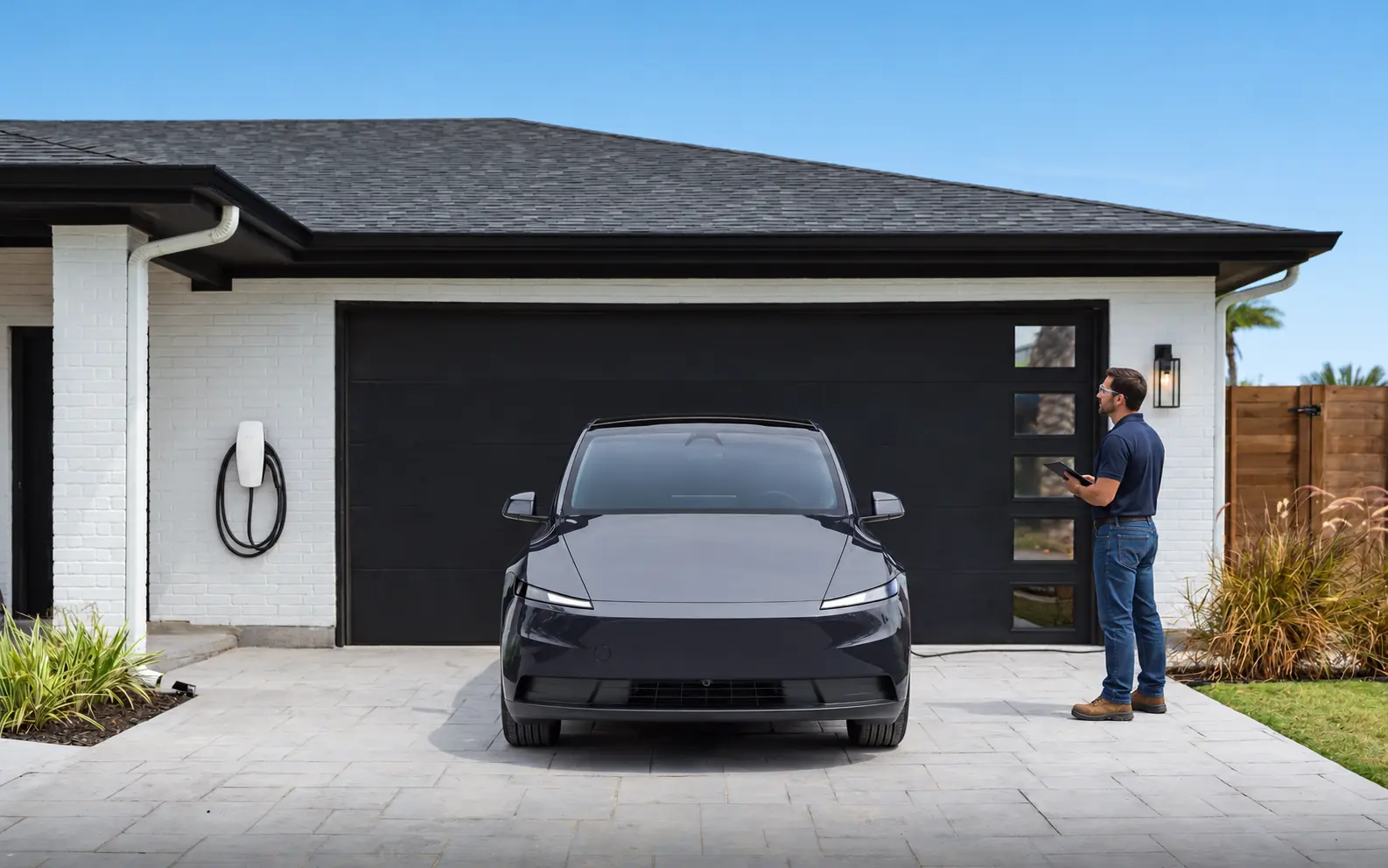
This article is general education, not electrical design or do-it-yourself instructions. A qualified professional must assess the property and applicable requirements.
An outdoor Tesla Wall Connector installation must work in bad weather and in ordinary daily use. Drainage, sun, impact exposure, the mounting structure, cable storage and the path to the panel all matter. This guide helps homeowners evaluate locations and written scopes while leaving equipment selection, electrical measurements and the final installation method to the qualified professional responsible for the site.
Outdoor placement must work with cable reach, drainage, exposure, impact risk, mounting structure and the electrical route. A convenient photograph location is only a candidate until the installer applies current product instructions and site requirements.
Observe the parking area through weather and daily use
Before choosing a mounting point, watch where water drains, snow piles, sprinklers spray, trash bins move, landscaping grows, and vehicles turn. Check morning and afternoon sun, gates, delivery paths, children’s play areas, and places where a cable would cross a walk. A convenient dry-day location can become a winter obstacle.
Park the vehicle in normal orientations and mark its charge port. The connector cable should reach without stretching across a bumper, tire, or pedestrian path. If more than one vehicle may use it, test both positions. A cable-management accessory should be part of the layout rather than an afterthought.
Choose a wall, post, or pedestal with structural intent
A suitable wall can provide a simple mount, but siding, masonry, insulation, and hidden services change the hardware and penetrations. A freestanding pedestal needs a stable base, underground raceway, impact planning, and a position that does not narrow the parking space. The equipment instructions and site conditions should guide the method.
Ask who handles concrete, excavation, sealing, paint, and landscape restoration. If a separate contractor installs the pedestal or trench, the electrician should define raceway, bends, pull points, depth, and inspection timing before the work is covered.
Protect equipment and wiring from physical damage
Outdoor circuits may use exterior raceway, building pathways, or underground wiring methods. Materials, fittings, conductors, and enclosures must suit the environment. Exposed equipment near vehicles may need setbacks, bollards, curbs, or another approved protective approach. Protection should not prevent connector access or create a door hazard.
Record underground routes before backfill with measurements and photographs. Future fence posts, irrigation, landscaping, and utility work can strike undocumented raceway. Keep required warning, depth, and inspection records with the property file.
Plan connectivity and public access
Exterior walls, distance from the router, and building materials can weaken connectivity. Test at the exact mounting point and discuss supported improvements. If access controls will limit use, confirm they are compatible with expected Tesla and non-Tesla vehicles before relying on them.
A charger visible from the street can attract curiosity or unauthorized parking. Equipment settings may help, but property signs, parking control, cable storage, lighting, and physical layout also matter. Avoid creating a cable or enclosure that pedestrians can easily snag.
Inspect the outdoor finish as carefully as the electrical work
At handoff, look for sealed penetrations, secure fittings, stable mounting, protected conductors, smooth cable handling, drainage clearance, and labels that remain readable. Confirm the installed current and test charging. The owner should know which maintenance is limited to ordinary cleaning and visual checks and which concerns require an electrician.
After severe weather, impact, flooding, or visible enclosure damage, stop and obtain guidance before use. Do not open the unit or exterior electrical boxes. Photograph the condition and provide the installer with the product identity, indicator behavior, and event description.
Compare outdoor proposals line by line
An outdoor quote should address the mounting surface or pedestal, raceway or underground path, conductor and protection, penetrations, weather sealing, impact protection when needed, commissioning and site restoration. Have each contractor identify the enclosure and mounting components, assumed subsurface or wall conditions, permit responsibility and restoration allowance. Bids cannot be compared fairly when one includes trench repair and protective hardware while another stops at electrical rough-in.
Watch for placing the cable across a walkway, mounting in a drainage problem, using unsuitable materials or ignoring vehicle movement and impact exposure. If trench conditions or a pedestal foundation cannot be known at the first visit, the quote should carry a defined allowance and verification step. It should not present unexamined exterior work as a fixed, finished scope.
The outdoor handoff should demonstrate cable reach and storage without a walking or traffic hazard and provide records for underground routes, settings and inspection. Photograph buried work before backfill and preserve any locating reference. Keep the contractor’s contact for weather sealing or site-work concerns alongside Tesla’s product-support information.
Document the outdoor site before pricing
Share the parking position, charge-port location, wall or pedestal options, sun and weather exposure, drainage, impact risk, public access, Wi-Fi signal and approximate panel distance. Safe exterior photographs taken after rain can be especially informative. Point out planned gates, landscaping or another vehicle space that may later affect cable reach or the buried path.
Ask how the company handles outdoor wiring, pedestal or wall mounting, trench coordination, current Tesla environmental guidance and commissioning. Verify the electrical contractor and permit responsibility for the address. Reconfirm that the scheduled crew supports the model and that any separate excavator or restoration trade is identified in the final proposal.
Photograph the parking area from several safe angles and mark where the vehicle’s charge port sits before the site assessment. Then request service with the product and address or review Tesla Wall Connector installation. Confirm product support, the assigned electrical provider, availability and all outdoor site-work responsibilities before scheduling.
Verify the finished outdoor installation
Review the outdoor plan in the field: mark the mounting height and surface, weather sealing, physical protection, trench or raceway, landscaping repair and cable storage. The contract should assign each civil and electrical task and specify the inspection point before concealed work is covered.
Check the proposed outdoor location and method against the installation material for the selected Wall Connector. The quote should identify the wall or pedestal, raceway or underground path, conductor and protection, penetrations, weather sealing, impact protection, commissioning and restoration. Ask the installer to explain how the documented equipment limits apply to sun, drainage and traffic at this site. A general product page cannot settle whether a particular pedestal, enclosure detail or exposed route is suitable.
Show the assessor the normal parking position, charge-port location, wall or pedestal options, sun and weather exposure, drainage, impact risk, public access, Wi-Fi signal and approximate panel relationship. Identify any landlord, HOA or facility decision-maker and provide site records you already have. Do not handle electrical components or excavate a route for the visit; the responsible professionals must verify those conditions.
Describe the outdoor handoff in measurable terms. The cable should reach the normally parked vehicle without creating a traffic or walking hazard; storage should be demonstrated; settings, underground routes and inspection status should be documented; and agreed penetrations or disturbed surfaces should be restored. These conditions define completion for the quoted project without promising how the site will perform after future changes.
List outdoor uncertainties before accepting the quote: drainage after heavy rain, underground obstructions, pedestal footing, bollards, Wi-Fi reach, property approval or restoration. For each one, record the person who will verify it, the evidence required and the point in the schedule when the answer is due. Update the proposal when a finding changes cost or design.
Plan for the way the outdoor space changes
Observe the proposed location in rain, direct sun and darkness when possible. Water may collect where the pavement appears level on a dry visit, landscaping can grow into the cable path and snow storage may block a low-mounted unit in some climates. Consider gates, trash pickup, sprinklers, delivery traffic and future fence work as well as the parked vehicle. Ask whether the scope includes a pedestal, physical protection, trench markings or photographs before burial. These details help the installer choose a durable position and give the owner a record that can prevent later digging or site work from damaging the charging circuit.
Frequently asked questions
Inspect the completed outdoor area after the first heavy rain or snow event from a safe distance. Look for ponding, landscape movement, blocked drainage or cable storage that changed with normal use. These observations do not replace electrical testing, but they can reveal civil or mounting conditions that deserve prompt installer review before repeated exposure.
Can Tesla Wall Connector be installed outside?
Use the environmental and installation ratings in Tesla’s current documentation. The complete wiring and mounting method must also suit the location.
Do I need a pedestal?
Not always. A suitable wall may work; a pedestal can help when no wall is near the parking space. Compare foundation, protection and routing needs.
Can the cable cross a sidewalk?
Plan to avoid pedestrian paths and trip hazards. If the site is constrained, ask for a compliant cable-management and accessibility solution.
Will direct sun affect location choice?
Environmental exposure, usable temperature, cable handling and equipment longevity should be considered using Tesla’s current guidance.
What should be documented underground?
Keep the permitted route, depth and material information, photos before backfill, inspection records and an accurate location reference for future work.
Sources
Request a property-specific assessment
Share the address, equipment and project goal. The service team can confirm the next step and proposed provider qualifications.
More from the learning center
Continue reading.
Related guides for the next decision.
Cable Routing for a Tesla Charger Installation
Compare Tesla charger cable routes through garages, attics, crawlspaces, exterior walls, and underground paths while planning access and restoration.
Read the articleDo I Need a Panel Upgrade for a Tesla Wall Connector?
Find out how electricians evaluate panel capacity for a Tesla Wall Connector and when load management, a smaller circuit, or panel work may be considered.
Read the articleGen 3 Tesla Wall Connector Installation Planning
Plan a Gen 3 Tesla Wall Connector project around the circuit, mounting location, connectivity, commissioning, power sharing, and future charging needs.
Read the article