

Electrician Near Me
How to Find an Electrician Near Me: A Step-by-Step Homeowner Guide
Learn how to find, verify, compare, and book an electrician near you with a homeowner process focused on safety, qualifications, scope, and clear quotes.
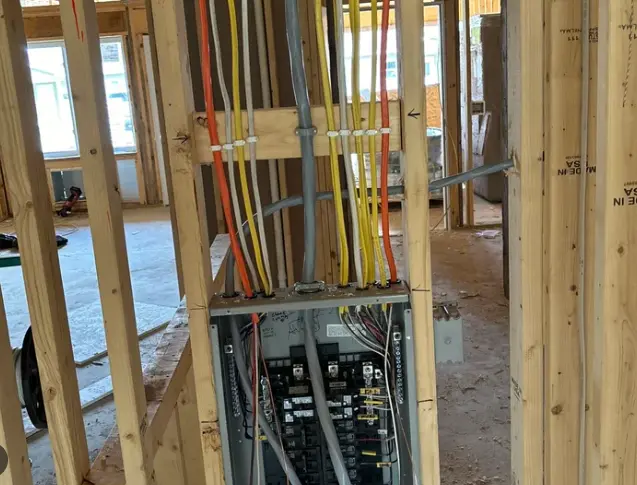
This article is general education, not electrical design or do-it-yourself instructions. A qualified professional must assess the property and applicable requirements.
Typing “electrician near me” is easy. Deciding which result should work on your home takes care. A map result can show that a company markets in your area, but it does not establish who will arrive, whether the business can legally contract for the work, or whether the technician has experience with your project. Use the search as a starting point, then work through a short qualification process.
This guide covers repairs and improvements such as lighting, dedicated circuits, panel work, EV charging, and remodeling. If there is active fire, smoke, sparking, an electric shock, a downed service line, or water around electrical equipment, move away and contact emergency services or the electric utility from a safe place. Do not open a panel or touch damaged equipment to gather information.
Step 1: Describe the result you need
Start with observations rather than a diagnosis. “The breaker serving the kitchen trips when the microwave and toaster operate” is more useful than “I need a bigger breaker.” “I want a hardwired charger on the garage wall, about 35 feet from the panel” is more useful than “I need a 60-amp circuit.” A qualified electrician should determine the design after reviewing the load, equipment instructions, route, and property.
Write down the affected room, when the condition began, whether it is constant or intermittent, and which appliances were operating. For planned work, collect the equipment manufacturer, model, installation manual, and intended location. Mention future plans that could affect capacity, such as another EV, a heat pump, an induction range, solar, or home battery storage.
Do not remove device covers or the electrical panel cover for photographs. Pictures of accessible labels, the work area, and the outside of the closed panel may help with routing, but they cannot replace the assessment.
Step 2: Choose the correct kind of appointment
Ask whether the first visit is a diagnostic call, estimate, inspection, or scheduled installation. Those appointments have different purposes. Troubleshooting can require testing and billable time. A planning estimate may examine visible conditions and develop options. A safety inspection should have a written boundary explaining which equipment and areas will be reviewed. An installation visit assumes the design, materials, access, and permit status are ready.
Clarify the initial charge, what time is included, and whether it is credited toward later work. If the company advertises a free estimate, ask whether that covers your kind of project. A proposal for a known installation may be estimated without charge, while an intermittent fault may require paid diagnostic work before anyone can price the repair responsibly.
Confirm the appointment window and how the provider handles delays. “Same day” and “24/7” are marketing terms unless the dispatcher gives you a real window and fee. Ask what outcome is realistic from the first visit, especially if parts, permits, utility coordination, or a return appointment may be needed.
Step 3: Build a shortlist from more than proximity
Create a shortlist of providers who describe the service you actually need. Review their own website for a legal business name, contact information, service categories, and a clear explanation of how appointments work. Treat directory profiles, social pages, and review sites as secondary evidence. They can reveal patterns, but they are not substitutes for license records or a written proposal.
Look for signs that the company distinguishes between an assessment and a guarantee. Responsible pages explain that panel capacity, equipment compatibility, permits, and scheduling are confirmed for the property. Be cautious with pages that claim every home needs the same solution or that present a city page as proof of an office that is not identified elsewhere.
Distance still matters for scheduling, but ask the company to confirm that it serves the address. Some providers work within defined radiuses; others schedule by county, utility territory, or project type. A listing found through an “electrician near me” search does not itself confirm coverage.
Step 4: Verify the contracting business
Request the legal business name and applicable electrical license number before authorizing work. Licensing systems vary: a state, county, or city may regulate the contractor, qualifying individual, or trade license. Use the official licensing authority’s lookup and check the status, classification, expiration, and public disciplinary information where available. Confirm that the name on the record matches the name on the proposal.
Ask who will sign the contract, pull the permit, supervise the work, and arrive at the home. If subcontractors may be involved, request their role and learn whose license applies. Manufacturer training or certification can matter for products that require commissioning or program eligibility; verify those claims through the manufacturer’s current resources instead of relying only on a badge.
Request insurance information appropriate to the property and project. A certificate can identify the named insured, policy period, and stated coverage, although it is not a promise that every loss is covered. For a major project, your property manager, lender, or counsel may have specific document requirements. Direct questions about the policy to the issuing agent or carrier.
Step 5: Test project fit during the first conversation
Ask the provider to describe the information needed to plan the job. An experienced electrician should discuss decision points without pretending to diagnose unseen conditions. For an EV charger, that might include the charger model, parking location, route, load calculation, panel capacity, and power-management options. For a remodel, it might include plans, appliance schedules, rough-in timing, inspections, and coordination with other trades.
Useful questions include: What conditions could change the scope? Is a permit likely, and who confirms it? Does the project require utility involvement? Which items should be selected before estimating? Who handles drywall, trenching, painting, or equipment mounting? What testing and labeling occur at completion?
Notice how the answers are framed. A careful provider can explain common approaches and identify what must be verified onsite. A remote promise that a panel definitely must be replaced, that a permit is never required, or that a price cannot change under any condition should prompt more questions.
Step 6: Compare written proposals on equal terms
Ask for a proposal that identifies labor, selected equipment, material allowances, permits, inspections, routing, restoration, cleanup, schedule assumptions, payment terms, exclusions, and warranty terms. Model numbers and ratings matter when equipment has been selected. If the design is not final, the proposal should say which decisions remain open.
Put competing quotes into the same categories. One total may include the permit, inspection attendance, wall repair, labeling, commissioning, and disposal. Another may exclude all of them. A lower number is not less expensive if essential work returns as a change order; a higher number is not automatically better if it includes vague allowances.
Ask how concealed conditions are handled. Finished walls and older homes can hide routing problems, damaged wiring, or prior alterations. A fair change-order clause should require a description and price approval before additional work proceeds, except for immediate actions needed to leave the property safe.
Step 7: Confirm permits and inspection responsibility
The authority having jurisdiction determines permit and inspection requirements, often under a state or locally amended electrical code. Utilities may publish separate rules for meters, service entrances, disconnects, generation, batteries, or interconnection. Ask who will verify the rules for the address rather than accepting a national yes-or-no answer.
The written scope should identify the permit applicant, inspection scheduling, correction responsibility, and any fees excluded from the price. Keep the permit, approved documents, inspection result, final invoice, product manuals, and warranty information with the home records. These documents are useful for later service, insurance questions, and a future sale.
An inspection is an important checkpoint, but it does not define every contractual detail. Equipment selection, finish quality, restoration, communication, and warranty service still need to be stated in the agreement.
Step 8: Prepare safely for the visit
Clear ordinary belongings from the work area only when it is safe. Keep children and pets away. Do not move wet materials near electrical equipment or remove covers to make access easier. Tell the provider about mobility needs, gates, parking restrictions, tenant notice, alarm systems, or planned power interruption.
At arrival, confirm the provider’s identity and review the reason for the visit. Ask before destructive access, extended shutdowns, or work beyond the agreed scope. If the electrician identifies additional concerns, request an explanation that separates immediate hazards, items necessary for the requested project, and optional improvements.
After completion, ask for a walkthrough of new controls, breakers, disconnects, or equipment that can be operated normally. Never ask for instruction that requires opening energized equipment. Make sure the panel directory and labels included in the scope are complete, and save commissioning records for connected products.
Frequently asked questions
How many electricians should I contact?
For planned work, two or three qualified proposals can help reveal scope differences. A straightforward small task may not justify several site visits. During an urgent hazard, use the proper emergency channel first and prioritize an appropriately qualified responder over collecting bids.
Does a high review score prove an electrician is qualified?
No. Reviews can describe communication and customer experience, but they do not replace an official license check, insurance documents, project-specific questions, and a written scope. Read patterns and recent details rather than relying on an average alone.
Should I buy equipment before contacting an electrician?
It is safer to confirm compatibility, capacity, location, warranty implications, and installation requirements first. If equipment is already purchased, send the complete model information and return-policy deadline when requesting service.
Can an electrician quote the entire job from photos?
Photos may help with screening, but they can miss capacity, conductor details, concealed routes, grounding, access, or local requirements. Ask which assumptions support a remote estimate and what could change after an onsite assessment.
Who should pull the electrical permit?
Rules differ by jurisdiction and project. Ask the licensing or permitting authority and require the contract to identify the permit applicant. Be cautious if a contractor asks the homeowner to obtain a permit simply to avoid contractor requirements.
What if two electricians recommend different solutions?
Ask each to identify the observed condition, calculation, manufacturer instruction, or rule supporting the recommendation. Compare alternatives, limitations, and future capacity. For expensive or unclear work, an independent qualified opinion can be worthwhile.
Request the next step
When your notes are ready, contact Voltera Energy or review home electrical services. Share the address and project so provider and service availability can be checked. A request is not a confirmed appointment, diagnosis, or final quote.
Sources
Request a property-specific assessment
Share the address, equipment and project goal. The service team can confirm the next step and proposed provider qualifications.
More from the learning center
Continue reading.
Related guides for the next decision.
Building a Whole-Home Electrical Upgrade Plan
Build a phased electrical plan that connects safety repairs, rewiring, panels, circuits, EV charging, electrification, solar, and backup power.
Read the articleChoosing an Electrician for a Home Remodel
Plan home-remodel electrical work around drawings, loads, lighting, permits, trade coordination, inspections, change orders, and future needs.
Read the articleChoosing an Electrician for an Older Home
Find an electrician who can assess an older home’s wiring, service, grounding, devices, access, and renovation needs without relying on assumptions.
Read the article