

Electrician Near Me
Hiring an Electrician for a New Dedicated Circuit
Plan a dedicated circuit by confirming the equipment load, route, panel capacity, protection, permit needs, and complete written installation scope.
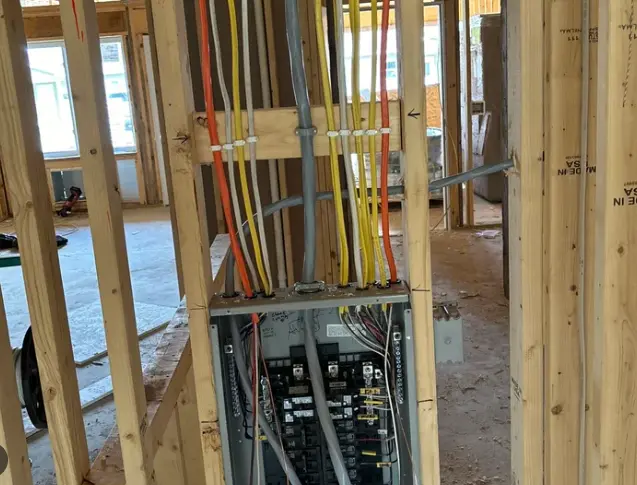
This article is general education, not electrical design or do-it-yourself instructions. A qualified professional must assess the property and applicable requirements.
A dedicated circuit is designed around a particular load, not around a generic label. Voltage, current, conductor, overcurrent protection, disconnecting means, connection method, route, and environment all depend on the equipment and the property. Homeowners can use this guide to gather specifications, ask capacity questions, and compare a complete scope before hiring. The final circuit design belongs to the qualified professional who reviews the manufacturer instructions and actual installation conditions.
Decide whether the situation is urgent
Most dedicated-circuit projects are planned work, but an existing appliance can reveal a problem before the new circuit is installed. Stop using equipment that produces smoke, sparks, a burning odor, electric shock, visible heat damage or repeated breaker trips. An active fire or immediate threat calls for emergency services, and a damaged utility service may require the electric utility. Move away and make the call from a safe place.
Do not keep resetting a breaker or move the appliance to random receptacles to see whether the symptom follows it. Leave panel covers and fixed wiring in place. From an ordinary safe position, note the equipment model, control setting, time of the event and whether another load was operating. Tell the dispatcher that the request includes both a reported symptom and a proposed dedicated circuit so the first visit can be scheduled appropriately.
Build a useful service request
Build the request around the load: manufacturer, exact model, nameplate, installation manual, connection method, location, duty cycle, and expected operating hours. State whether the equipment has been purchased and whether the preferred route crosses finished rooms, exterior areas, or another structure. Also mention future equipment likely to share capacity. Photos are useful only from ordinary safe positions; the electrician, not the homeowner, should open or test electrical equipment.
Tell the scheduler whether the equipment is already on site and whether an existing circuit is malfunctioning. A visit to diagnose recurring trips is different from a survey and quote for a new circuit. Ask whether the electrician expects to inspect the proposed route, perform a load calculation, review the equipment instructions, or complete work during that appointment. The answer determines which records and access you should prepare.
Verify the business and the people doing the work
Request the legal business name and the license information that applies to the project address. Use the official state or local licensing authority’s lookup, not a screenshot supplied by a directory. Check status, classification, expiration, and disciplinary documentation where the public record provides it. Licensing rules vary, so ask which entity will contract, pull the permit, supervise the work, and appear for inspection.
Ask for insurance documentation suitable to the project, and verify questions with the issuing agent or carrier when the work or property owner requires it. A certificate is not a warranty that every event is covered, but it helps identify the named insured, policy dates, and stated coverage. If subcontractors may be used, ask who they are, who supervises them, and whose license and insurance apply.
Compare the complete written scope
The work order should tie the circuit rating and connection method to the named equipment. It should also define the route and wiring method, breaker and required protection, receptacle or disconnect when applicable, permit, inspection, testing, labeling, and whether the electrician makes the final equipment connection. Identify responsibility for trenching, patching, paint, or another trade. If the route or capacity remains uncertain, the quote should describe the allowance or approval step rather than hiding it in a lump sum.
One provider may include a permit, inspection corrections, labeling, cleanup, and commissioning while another assumes the homeowner will arrange them. Ask each bidder to clarify the same list of questions. A written change-order process is worth documenting because concealed conditions can appear after work begins, especially in finished or older buildings. Compare quotes line by line instead of comparing totals alone.
Understand permits, inspections, and code responsibility
The authority having jurisdiction determines permit and inspection requirements. The applicable electrical code may be adopted with state or local amendments, and utilities can have separate service rules. Ask who will confirm those requirements, who will be listed on the permit, and who will schedule and attend inspections. Do not accept a blanket statement that a certain kind of work never requires a permit everywhere.
An inspection is a useful checkpoint, but it does not replace good design, competent installation, manufacturer instructions, or a clear contract. Ask how failed inspections, requested corrections, hidden pre-existing defects, and work outside the original scope are handled. Keep permits, approved plans, inspection records, equipment manuals, and the final invoice with the property records.
A practical homeowner checklist
Before booking, define the equipment and required result, screen any existing symptom for hazards, and gather the manual and site details. Confirm what the first visit includes; verify the contracting business and applicable license; request suitable insurance information; and look for experience with the equipment and circuit type. Compare written scopes, exclusions, permit and inspection responsibility, change-order terms, and final documentation.
You do not need to design the circuit yourself. Your job is to supply the exact equipment information, explain how it will be used, and compare complete written proposals. The electrician should be able to connect conductor, breaker, receptacle or hardwired connection, route, and capacity decisions to the equipment instructions and site conditions. Pause if a bidder will not document those choices or suggests defeating a protective device.
Start with the equipment nameplate and instructions
A “dedicated circuit” is a purpose, not a complete design. The electrician needs the equipment voltage, current, phase, duty cycle, connection method, overcurrent requirements, environmental rating, and manufacturer instructions. A label or manual is more reliable than a retailer’s abbreviated description. Provide the exact model and intended location.
Examples include HVAC equipment, pumps, kitchen appliances, workshop tools, EV chargers, and laundry equipment. Each can have different disconnect, receptacle, neutral, grounding, GFCI, or continuous-load considerations. Do not buy a breaker, cable, or receptacle from a generic chart before the route and installation conditions are reviewed.
Map the complete route before accepting the scope
Walk from the panel to the equipment location and identify finished rooms, attic or crawl access, exterior exposure, masonry, fire-rated assemblies, trenching, and future obstruction. Ask how the wiring will be supported and protected and where visible raceway is expected. If wall repair is excluded, identify the openings likely to remain.
The quote should name the circuit rating, wiring method, breaker or protective device, receptacle or disconnect, equipment connection, labeling, permit, inspection, and testing. Ask whether panel capacity has been assessed and what happens if the intended space cannot accept the new circuit. Keep the equipment manual and final circuit information together.
Consider service access after installation. A disconnect hidden behind stored items or a receptacle blocked by fixed equipment may be difficult to inspect and maintain. Share final equipment dimensions, clearances, cord length, ventilation needs, and manufacturer mounting diagram. If the appliance will be replaced later, document which characteristics a replacement must match instead of assuming the new circuit is suitable for any model.
Ask how the new load affects panel documentation and any existing load-management equipment. Connected controls, interlocks, transfer equipment, or energy systems may change the planning even when an empty breaker space is visible. Provide records for those systems so the designer does not treat the new circuit as an isolated addition.
For equipment supplied by another trade, identify who performs the final connection, startup, and warranty registration. The electrician may provide power to a disconnect while an HVAC, appliance, or equipment technician completes different work. Put that boundary in both proposals so testing is not missed and neither company assumes the other owns the last step.
Frequently asked questions
Does dedicated mean nothing else can use the circuit?
It generally describes a branch circuit assigned to particular equipment or use, but the actual design follows equipment instructions and applicable rules. Have the electrician define the connection and labeling.
Can an unused breaker space guarantee capacity?
No. Physical space and electrical capacity are different questions. The assessment considers service and feeder loads, panel suitability, equipment ratings, and the proposed circuit.
Should I buy the appliance first?
You need exact specifications, but ordering before checking connection, route, capacity, and return timing creates risk. Discuss the model before purchase when possible.
Will the electrician patch walls after routing cable?
Only if the scope says so. Ask which openings are expected and whether patching, texture, paint, masonry, or cabinetry work is included or assigned to another trade.
Can one dedicated circuit serve future equipment?
Only equipment compatible with the designed voltage, rating, connection, and use. Avoid vague future-proofing; identify realistic loads and ask which pathway or capacity choices genuinely support them.
Next step for a dedicated circuit
Provide the service address, equipment model, installation manual, intended location, and preferred timing when you contact Voltera Energy. The project team can check availability and determine whether the first visit should address an existing symptom, evaluate the route and capacity, or both. A submitted request does not confirm an appointment or final price. Related options are listed under home electrical services.
Sources
Request a property-specific assessment
Share the address, equipment and project goal. The service team can confirm the next step and proposed provider qualifications.
More from the learning center
Continue reading.
Related guides for the next decision.
Building a Whole-Home Electrical Upgrade Plan
Build a phased electrical plan that connects safety repairs, rewiring, panels, circuits, EV charging, electrification, solar, and backup power.
Read the articleChoosing an Electrician for a Home Remodel
Plan home-remodel electrical work around drawings, loads, lighting, permits, trade coordination, inspections, change orders, and future needs.
Read the articleChoosing an Electrician for an Older Home
Find an electrician who can assess an older home’s wiring, service, grounding, devices, access, and renovation needs without relying on assumptions.
Read the article