

Tesla Home Energy
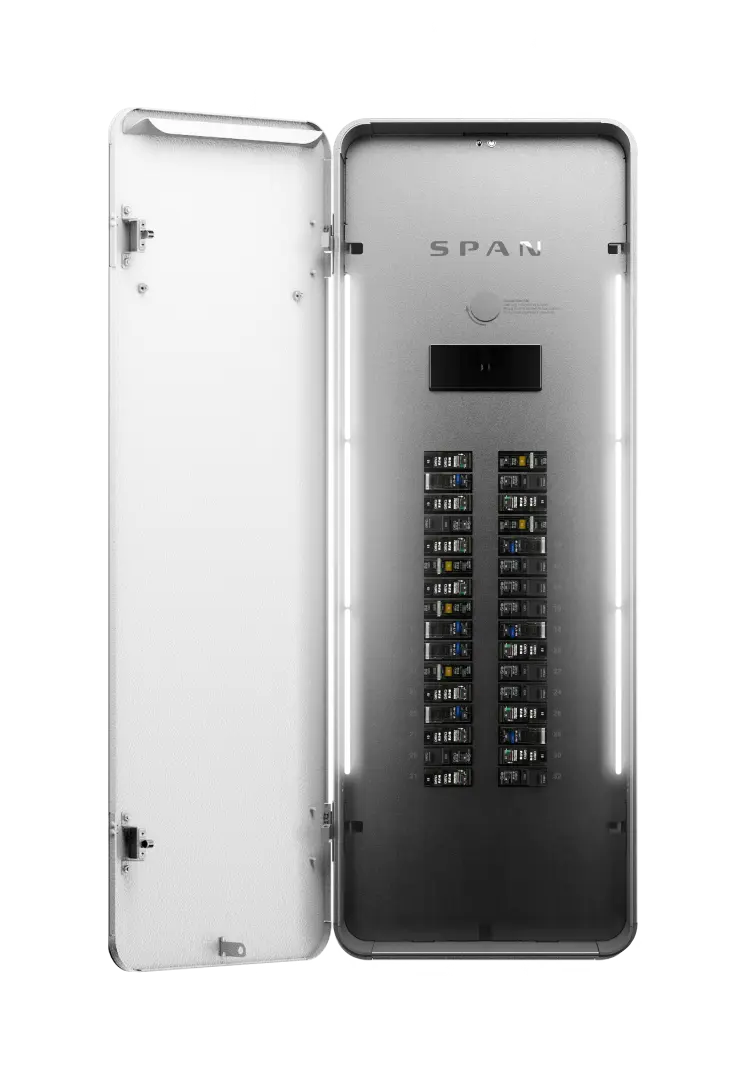
SPAN Smart Panel and Tesla Charging: Planning Together
Plan SPAN smart-panel work with Tesla charging by separating energy monitoring, circuit control, load management and service-capacity decisions.
This article is general education, not electrical design or do-it-yourself instructions. A qualified professional must assess the property and applicable requirements.
A SPAN smart panel and Tesla Wall Connector can be planned as part of one home-electrification project, but they solve different problems. The panel distributes and may monitor or control circuits. The Wall Connector supplies an EV under its approved circuit and configuration. Neither product creates unlimited utility-service capacity, and app connectivity does not replace a load design.
The right project begins by identifying why the existing panel is being changed and what the charging system needs. A smart-panel replacement may be valuable for monitoring, controls, backup priorities or modernization, yet it should not be presented as mandatory for every Tesla charger.
Separate the panel goal from the charger goal
Write two problem statements. For the charger, define vehicle, daily mileage, parking location and available charging window. For the panel, identify condition, spaces, service arrangement, monitoring, backup or load-control goals.
This separation reveals whether both projects are needed now. A home may support the charger with the current panel. Another may need panel replacement because of condition even without EV charging. A third may pursue a smart panel primarily for Powerwall backup management.
Ask the estimator to explain the relationship. “Future proofing” is not a complete reason without naming the future loads and design choices.
Document the existing service
Provide safe photographs of the meter, service disconnect and panel labels. Gather panel schedules, solar diagrams, generator records and recent permits. Do not remove covers; internal inspection belongs to the electrician.
The professional should identify service rating, panel condition, grounding and bonding arrangement, distribution, major loads and any utility constraints. Available breaker slots do not prove capacity, and a full panel does not necessarily require a larger service.
If the panel contains equipment with known service concerns, ask for a condition-based explanation and corrective options rather than relying on the brand name alone.
Understand what SPAN controls
Request the current SPAN product documentation for the exact panel and accessories. Ask which circuits are monitored, which can be controlled and how priorities are set. A smart panel may provide visibility and controls, but those features have defined ratings and supported configurations.
Clarify local versus cloud operation and behavior during communication loss. Critical circuits should not become mysterious when internet service is unavailable. The household needs to know which functions continue and which app features pause.
If Powerwall is present or planned, ask how SPAN participates in backup management and where the Tesla gateway or backup interface appears in the architecture.
Understand what Wall Connector controls
The Wall Connector is configured for a branch circuit and may support Tesla power-management or power-sharing features in compatible designs. Its load controls are not automatically the same as SPAN circuit controls.
Ask which device limits charging, which measurements it uses and how settings are coordinated. Two systems trying to control the same load without a clear hierarchy can create confusing behavior.
The proposal should state the Wall Connector model, circuit rating, configured current and any dynamic-management hardware. Verify current Tesla requirements rather than assuming an app integration is sufficient.
Compare load management with service expansion
When the home has limited capacity, options may include a moderate charger setting, approved dynamic load management, circuit control or service upgrade. Each has costs, limits and failure behavior.
Request the load assessment behind the recommendation. A smart panel can help manage selected loads, but it does not increase the conductors or transformer serving the home. The designer must show how the selected strategy stays within the approved capacity.
If a service upgrade is proposed, identify utility, meter, service-entrance, permit and outage work. Compare that complete scope with management alternatives rather than comparing hardware prices alone.
Plan the panel replacement process
Panel work can interrupt most or all power. Ask how long the planned outage lasts, what happens if inspection or utility work is delayed and how critical household needs will be protected.
The scope should list breaker replacement, circuit identification, surge protection if included, grounding or bonding work, wall repair and labeling. Existing unlabeled or modified circuits may require investigation.
Confirm who coordinates the utility, pulls permits, schedules inspection and closes corrections. A smart-panel project can be more than an equipment swap when service equipment changes.
Coordinate solar and Powerwall
Existing solar connections and metering must be identified before the old panel is removed. Moving circuits or sensors can affect monitoring. Provide solar one-line diagrams and inverter information.
For a Powerwall system, show the backed-up boundary, SPAN panel, gateway, batteries and Wall Connector on one diagram. Ask how circuit priorities operate during an outage and whether EV charging is limited or deferred.
After work, both Tesla and SPAN monitoring should be reviewed under conditions that make the flows understandable. Persistent inconsistent readings require professional correction.
Design the physical layout
SPAN requires appropriate working space and service access. Wall Connector placement should serve the parked Tesla without cable hazards. Powerwall, solar equipment and communications may compete for the same walls.
Lay out every enclosure and pathway before demolition. Consider door swing, cabinets, vehicles, water sources and future equipment. Do not choose a charger position solely to keep brand equipment visually grouped.
If the panel moves, conductor extensions, junctions and finish repairs should be shown. A same-location replacement and relocation are different projects.
Assign product qualifications and support
Confirm the provider’s current qualifications for SPAN and the applicable Tesla products. General electrical licensing remains necessary where required, but manufacturer-specific commissioning and account setup can involve additional capability.
If different companies handle panel and Tesla work, identify the overall designer. The customer should not be left to determine why one system’s controls interfere with another.
Separate product warranties and installer workmanship terms. Ask who diagnoses an issue spanning both devices and how the case is escalated.
Commission both platforms
Electrical handoff should include circuit testing, accurate labels, panel schedule, Wall Connector configuration and permit closure. Product commissioning should establish owner access, monitoring and intended controls.
Test ordinary Tesla charging at the normal parking position. Then review any managed-load condition through the approved procedure. For Powerwall, verify the backup priorities described in the design.
Save one-line diagrams, circuit schedules, settings, model and serial records, inspection results and support contacts. These records will matter when new loads are added.
Plan new electric loads deliberately
List likely heat pumps, water heating, induction cooking, second EV, solar or storage. Estimate timing and priority. This allows the designer to reserve pathways or distribution options without treating every idea as immediate demand.
Reassess capacity when a project becomes real. A smart panel’s historical data can inform future decisions, but it does not replace applicable design calculations and inspection.
Keep access around the panel and never use control features to mask a damaged circuit or equipment fault. Controls manage normal loads; they are not repairs.
Define failure and recovery behavior
Ask the designer what happens when home internet, a cloud service, local communications or one product becomes unavailable. The answer should distinguish monitoring loss from loss of circuit control and from an electrical fault. A homeowner needs to know which loads continue automatically, which settings remain stored and which symptoms require a service call.
Create a recovery table with four columns: observed symptom, safe homeowner action, responsible support channel and conditions that require immediate shutdown or emergency help. An app that stops updating may call for a different response than a hot enclosure, burning odor or repeatedly tripping circuit. Do not let software troubleshooting instructions encourage anyone to open the panel.
Include manual household priorities for an outage. If SPAN controls circuits within a Powerwall backup design, occupants should know which loads can be deferred even when automation is working. Likewise, Wall Connector charging can be paused from approved user controls when preserving storage matters. These operational choices should not alter installer-only electrical settings.
Test the support chain before closeout. The owner should have verified access to both platforms, correct property ownership and product serial records. Ask whether one provider will triage cross-system issues or whether SPAN, Tesla and the electrician have separate contacts. Record the agreed escalation order so a future fault does not become a three-company guessing exercise.
Frequently asked questions
Does SPAN eliminate the need for a service upgrade?
Not automatically. It may support approved control strategies, but the electrician must assess service capacity and the proposed loads.
Is SPAN required for Tesla Wall Connector?
No universal requirement exists. Charger design depends on the vehicle, circuit, home capacity and selected management approach.
Can SPAN control Tesla charging?
Capabilities depend on current products and configuration. Ask the designer to identify the exact control path and supported behavior.
Who commissions the combined project?
The contract should name qualified parties for SPAN, Tesla and electrical commissioning, plus one party responsible for system coordination.
Should the panel and charger be installed together?
They can be coordinated when both are justified, potentially avoiding duplicated planning. Compare the complete combined scope with staged options.
Request a coordinated electrical assessment
Explore panel upgrades, Tesla charging or request service. Product support and provider availability are confirmed for the property.
Sources
Request a property-specific assessment
Share the address, equipment and project goal. The service team can confirm the next step and proposed provider qualifications.
More from the learning center
Continue reading.
Related guides for the next decision.
Adding Powerwall to an Existing Solar System
Evaluate inverter compatibility, array details, utility rules, monitoring and backup goals before adding Tesla Powerwall to existing rooftop solar.
Read the articleCommercial Tesla Charging Installation Planning
Plan commercial Tesla charging around users, dwell time, site power, parking, networking, accessibility, ongoing operations and future expansion.
Read the articleEV-Ready New Construction for Tesla Charging
Design an EV-ready home with practical conduit, panel space, parking layouts, load planning and flexible options for Tesla or multi-brand charging.
Read the article