

Tesla Home Energy
Adding Powerwall to an Existing Solar System
Evaluate inverter compatibility, array details, utility rules, monitoring and backup goals before adding Tesla Powerwall to existing rooftop solar.
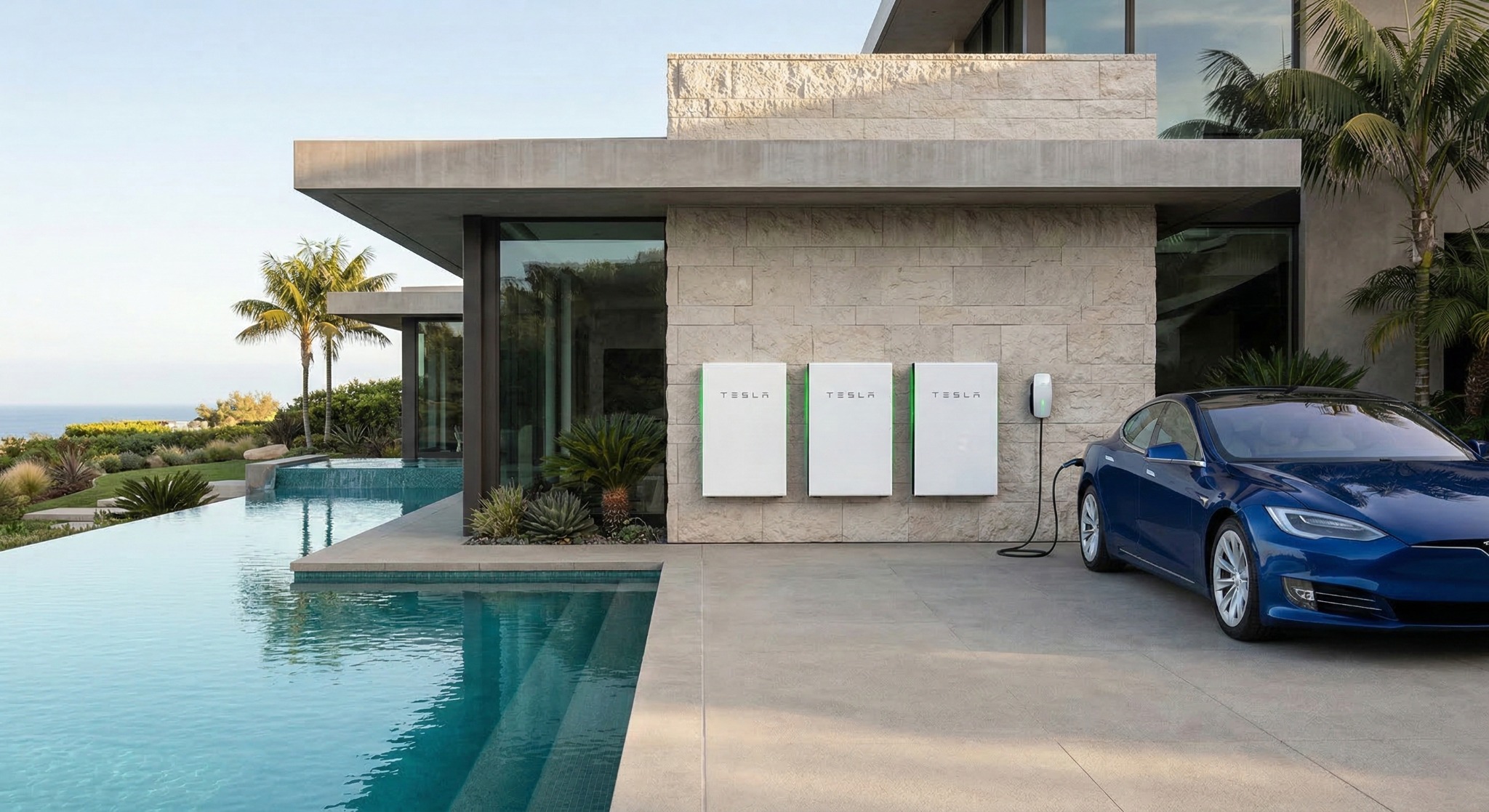
This article is general education, not electrical design or do-it-yourself instructions. A qualified professional must assess the property and applicable requirements.
Adding Powerwall to an existing solar system is a retrofit, which means the new design must begin with equipment and decisions made years earlier. Inverter type, array connections, metering, service layout, interconnection approval and roof access all affect the project. The original solar system should be documented before anyone promises compatibility or backup behavior.
The goal is not merely to attach a battery. It is to create a supported solar-plus-storage system whose normal and outage operation can be explained, permitted and commissioned.
Reconstruct the existing solar record
Collect the original contract, permit set, one-line diagram, final inspection, utility permission to operate and equipment warranty. Download production history and note the monitoring platform. These records can reduce exploratory work.
If documents are unavailable, photograph inverter, disconnect and accessible panel labels without opening equipment. Record installer and utility account information. A qualified assessor can verify hidden wiring and service connections.
Compare records with what is physically present. Solar systems may have been expanded, repaired or altered after their original permit. The new design should reflect the current installation, not an outdated proposal.
Identify inverter architecture
Existing solar may use a central inverter, microinverters, optimizers or other arrangements. Powerwall integration differs based on equipment and system design. Provide exact model numbers rather than a general brand name.
Ask how the proposed Tesla system measures solar and controls it during an outage. The provider should explain which existing components remain, which are replaced and how compatibility was verified.
Do not assume that because solar and Powerwall each work independently they will operate together in backup. Grid-isolation and generation control require a supported architecture.
Review production and consumption separately
Utility bills may show net energy after solar, not the home’s full consumption. Use solar monitoring plus utility interval data to estimate gross load. Mark seasonal changes, shading events and periods when the inverter was offline.
Battery sizing should address backup priorities and daily energy goals. A home with strong midday exports may use storage differently from a home that consumes most solar as it is produced.
Ask the designer to show at least one seasonal example. Annual totals can conceal low winter production or high summer cooling loads.
Define the backup objective
List essential loads and acceptable outage behavior. Identify refrigeration, communications, medical equipment, water systems and climate needs. Then identify large discretionary equipment such as EV charging, pool systems or resistance heat.
Decide between a broad whole-home boundary and selected loads. Request a one-line diagram showing panels, controls, gateway equipment, Powerwall and solar. The diagram should make clear which circuits remain supported.
Runtime projections need load assumptions and solar conditions. They should not be stated as unconditional days of backup.
Check service and panel condition
The retrofit may need space for backup-interface equipment, breakers, metering or a selected-load panel. Existing solar connections can occupy service or panel positions important to the new design.
Have the electrician inspect equipment condition and capacity. A panel upgrade should be justified by a specific issue—condition, capacity, space, service architecture or backup design—not added automatically to every battery project.
If service work is required, identify utility appointments and planned outages. The battery installation timeline may depend on external coordination.
Find practical equipment locations
Powerwall location must follow current Tesla instructions and applicable requirements for mounting, clearances, exposure and protection. Existing solar equipment, gas meters, doors, windows, vehicles and working spaces may limit options.
Outdoor placement introduces climate, drainage, impact and landscape considerations. Indoor placement may compete with storage, a Wall Connector or future equipment. Review the entire wall and route, not only the battery footprint.
Ask where gateway, disconnects and panels will go. A proposal that shows only Powerwall rectangles is not a complete physical plan.
Protect the roof and original workmanship
Battery work may not touch the roof, but changes to solar wiring or equipment can affect prior workmanship responsibilities. Read the original contract and contact the solar provider if notice or approval is required.
If roof replacement is likely, decide whether storage work should wait or be coordinated. Document conduit and penetrations so roof contractors can avoid damage later.
When the new provider assumes responsibility only for modified components, require a clear boundary. Future service is difficult when each contractor blames an undocumented change.
Update permits and utility interconnection
Adding storage can require electrical permits and an updated utility application. Operating mode, export settings and equipment ratings may affect the process. Confirm requirements for the address rather than borrowing another utility’s procedure.
The contract should assign plan preparation, submission, fees, inspection, corrections and permission to operate. Ask when batteries and solar may legally operate under their final settings.
Keep the updated approval with the original solar documents. The combined record should show the system after retrofit.
Coordinate monitoring and metering
After installation, the Tesla app may display solar, home, grid and battery flows. Correct display depends on sensor placement and configuration. The installer should verify values under conditions that make each direction understandable.
Determine whether the original solar monitoring remains active. Two platforms may report different measurement points or update intervals, so small discrepancies do not automatically indicate failure.
Persistent reversed or impossible flows deserve professional correction. Homeowners should not move current transformers or open panels to troubleshoot monitoring.
Commission grid and outage modes
Commissioning should follow Tesla’s current process and include equipment discovery, communications, metering and backup configuration. Ask for an approved outage-mode demonstration or orientation.
Observe what happens to solar when the grid is absent, batteries approach full charge and large loads start. The household should know which behavior is normal and which alert requires service.
Save reserve settings, panel schedules, one-line diagram, model and serial information, permit result, utility approval and support contacts. These records define the newly integrated system.
Compare retrofit proposals fairly
Each proposal should list existing equipment assumptions, Powerwall quantity and generation, gateway or backup interface, metering, panel work, solar changes, permits and commissioning. Compare backup boundaries and load scenarios before price.
Ask which existing warranties may be affected and who supports the solar system after modification. Obtain Tesla equipment terms and installer workmanship coverage separately.
Use a written change procedure for undocumented solar conditions. An allowance can be reasonable, but it should identify likely discoveries and approval steps.
Plan EV charging and future solar changes
Tell the designer about a Tesla Wall Connector, second EV, solar expansion or roof project. EV charging can consume stored energy rapidly during backup; define whether it is controlled or excluded.
If expansion is likely, preserve accessible pathways and records. Do not assume another Powerwall or more solar can be added without compatibility and utility review.
Schedule changes based on actual need. Coordinated planning should reduce rework, not become a reason to purchase every possible upgrade now.
Use a retrofit-readiness matrix
Before choosing equipment, place each existing-system item into one of four columns: confirmed compatible, compatible with modification, requires replacement, or still unknown. Include the inverter, service connection, solar disconnects, monitoring, panels, utility agreement and roof condition. Require a source or inspection finding for each conclusion. This prevents a salesperson’s broad “yes, it works” from becoming the technical basis of the project.
For every modification, identify its downstream effect. Replacing an inverter can change monitoring and utility documents. Moving a solar connection can change metering. Adding a selected-load panel can change circuit labels. Mounting equipment on an exterior wall may affect drainage, landscaping or future access. The matrix should link these consequences to the written scope.
Unknowns are not automatically disqualifying. They need a resolution step, responsible party and deadline before procurement or installation passes the point where change becomes expensive. For example, the provider might verify an inverter model during the site visit, confirm a utility rule before final engineering, or complete limited exploratory work under a stated allowance. Close each item and add the evidence to the final system file.
Review the matrix at handoff and change every remaining item to resolved, deferred or excluded. A deferred roof repair or monitoring correction should have an owner and date. This final reconciliation keeps an early design assumption from surviving unnoticed into the operating system.
Frequently asked questions
Can Powerwall be added to every solar system?
Not automatically. Inverter, metering, service, utility and Tesla product compatibility must be evaluated for the existing installation.
Do I need the original solar installer?
Not always, but review prior agreements. A new provider should understand and document any changes it makes.
Will solar recharge Powerwall during an outage?
A supported design may allow it under suitable conditions. Ask the installer to explain controls and limits for the proposed architecture.
Does the utility need to approve the battery?
Requirements vary. Confirm interconnection and operating approval with the serving utility and responsible provider.
What data helps with sizing?
Interval home use, solar production, seasonal patterns, major loads and backup priorities provide a stronger basis than a single bill.
Request a retrofit assessment
Explore Tesla Powerwall installation or request service. Existing-system compatibility and qualified-provider availability are confirmed for the address.
Sources
Request a property-specific assessment
Share the address, equipment and project goal. The service team can confirm the next step and proposed provider qualifications.
More from the learning center
Continue reading.
Related guides for the next decision.
Commercial Tesla Charging Installation Planning
Plan commercial Tesla charging around users, dwell time, site power, parking, networking, accessibility, ongoing operations and future expansion.
Read the articleEV-Ready New Construction for Tesla Charging
Design an EV-ready home with practical conduit, panel space, parking layouts, load planning and flexible options for Tesla or multi-brand charging.
Read the articleHow to Choose a Tesla Certified Installer for Powerwall
Compare Tesla Powerwall installers by product qualifications, design process, scope clarity, commissioning and local project responsibility.
Read the article