

Tesla Home Energy
Planning a Multi-Powerwall Home Backup System
Plan a multi-Powerwall system using measured loads, backup priorities, solar production, product compatibility and a documented operating strategy.
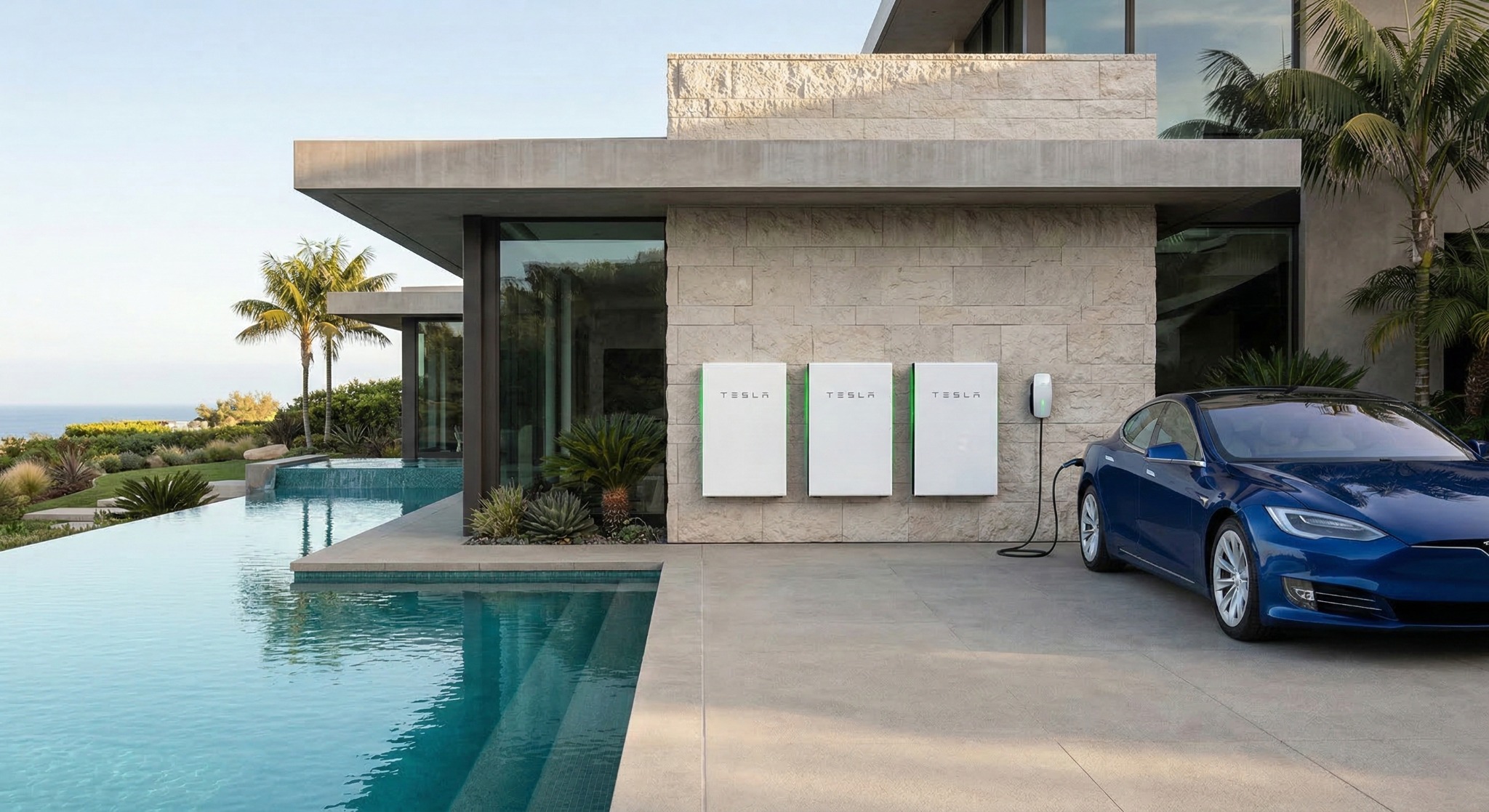
This article is general education, not electrical design or do-it-yourself instructions. A qualified professional must assess the property and applicable requirements.
Adding Powerwalls is not a simple multiplication exercise. More batteries may increase available energy or power in a supported configuration, but the value depends on the home’s load profile, solar production, desired backup duration and limits of the complete system. A multi-Powerwall proposal should explain why each unit is included and what operating result the design is intended to support.
The homeowner’s job is to define priorities and supply reliable records. The qualified designer’s job is to select compatible equipment, calculate loads, prepare the electrical architecture and state the limits.
Define the reason for multiple batteries
Common goals include longer outage coverage, support for demanding equipment, storage of a larger solar array or more flexibility under time-of-use rates. Rank these goals. A design optimized for backup resilience may reserve energy differently from one optimized for daily rate shifting.
Specify the outage to plan around. Is it a short utility interruption, overnight event or multi-day storm? Which loads must continue throughout, and which can be used briefly? A duration target without a load list is incomplete.
Avoid using an EV battery as the sizing reference. The home and vehicle are different loads with different priorities. Decide whether EV charging is allowed during backup before it enters the model.
Build a load inventory by time
List essential circuits, major appliances, motor loads and seasonal equipment. Then create a simple timeline for morning, afternoon and overnight use. This exposes combinations that monthly energy totals cannot show.
Download interval utility data and solar production when available. Mark atypical vacations, construction or extreme weather so the designer can interpret them. For all-electric homes, capture both summer cooling and winter heating periods.
The design should examine peak power and energy consumption separately. A set of batteries can contain ample energy yet encounter a limit when several large loads start together.
Compare backup scenarios instead of one runtime claim
Ask for at least three scenarios: essential loads only, normal conservation behavior and a demanding case. Each should list active loads, starting battery reserve, assumed solar and estimated duration. These are planning examples, not guarantees.
Review the sensitivity. What happens if solar is unavailable for a day? What if air conditioning runs longer? Which discretionary load most strongly reduces duration? This information helps the household manage a real outage.
A provider should not describe runtime only as “days.” Kilowatt-hours used by the selected loads and time-varying production belong in the explanation.
Verify compatible Tesla architecture
The proposal must identify Powerwall models, quantity, gateway or backup interface, solar equipment, metering and electrical distribution. Tesla publishes limits and supported configurations that can change with product generation and firmware.
Do not assume older and newer units can be combined or that a future expansion will use the same hardware. Ask the provider to cite the current installation documentation for the proposed system.
If multiple groups or locations are planned, require a diagram showing communications and electrical relationships. The aesthetic appeal of distributed batteries does not establish technical acceptability.
Plan physical placement for the full array
Multiple units require suitable structural mounting, working space, environmental protection, access and pathways. Candidate walls may also be needed for panels, gateway equipment, a Wall Connector or future heat-pump hardware.
Show vehicles, garage-door movement, storage and walking paths on the layout. Outdoor arrangements should account for drainage, climate, landscaping and impact. Let the installer apply current Tesla clearances rather than estimating from photographs.
Think about service access. A failed unit or adjacent electrical component should not require dismantling unrelated construction. Ask how equipment can be isolated and reached.
Coordinate solar with storage quantity
Solar can recharge batteries during suitable conditions, potentially extending an outage. Its contribution depends on array size, season, weather, shading, inverter design and available storage space. Use production history for existing systems.
With new solar, ask for monthly production estimates and curtailment assumptions. A large battery bank may remain underused without enough production, while a large array may be constrained when batteries are full and export is limited.
Confirm how solar behaves during grid outages. The supported system must maintain safe isolation and control generation; ordinary grid-tied solar may not operate by itself when the grid is down.
Choose whole-home, selected-load or controlled backup
Whole-home backup defines a broad electrical boundary but does not mean unlimited simultaneous operation. Selected-load designs prioritize circuits in a separate panel. Load-control devices can manage certain equipment dynamically or by rule.
Compare the circuit work and household behavior each approach requires. A selected-load panel may exclude future equipment unless redesigned. Whole-home architecture may depend more heavily on controls and conservation.
The one-line diagram and panel schedules should show the decision. During commissioning, the homeowner should learn which loads are controlled and what happens if communication is lost.
Account for EV charging
An EV can absorb energy comparable to many hours of essential home use. Decide whether charging is disabled, limited or allowed only above a reserve during outages. Document the behavior supported by the proposed Tesla system.
On ordinary grid-connected days, Wall Connectors may use scheduled charging, solar-aware features or power sharing. Those strategies serve different goals from backup load control and should be described separately.
If emergency driving is a priority, model a defined amount of vehicle energy rather than an unrestricted full charge. This lets the homeowner see the tradeoff with refrigeration, climate or water loads.
Review permits, utility and incentives
Battery quantity and operating mode can affect permit documents and utility interconnection. Ask who prepares plans, submits applications, schedules inspections and responds to corrections. Permission to operate may be separate from physical completion.
Verify incentives through official program sources. Capacity limits, eligible equipment, application timing and customer status may affect qualification. An installer can assist, but should not guarantee an external administrator’s decision.
Keep all approvals with the system records. A later battery addition may require updated permits and utility review rather than merely attaching another unit.
Commission every component and operating mode
Commissioning should confirm that all batteries are recognized, metering is accurate, communications are stable and the backup boundary behaves as designed. Solar and Wall Connector integrations should be checked when included.
Ask for an outage-orientation demonstration under the approved procedure. Learn how to read battery state, reserve, grid status and alerts. Understand what actions conserve energy and which faults require professional support.
Retain model and serial records for each unit, diagrams, settings, permits, utility approval and separate equipment and workmanship terms. Multi-unit service is much easier when the exact configuration is documented.
Establish an expansion policy
Some households intentionally begin with fewer units. If that is the plan, ask what conduit, wall space, distribution and communications are prepared. Identify the assumptions that must be rechecked later.
Product compatibility can change. A statement that expansion is physically possible today is not a guarantee that future hardware will combine with the existing system. Require a new design review before purchase.
Likewise, removing or relocating a unit changes the approved architecture. Treat it as electrical and product work, not movable furniture.
Run a tabletop storm exercise
Before finalizing quantity, walk through an imagined forty-eight-hour outage hour by hour. Choose a realistic season, starting reserve and solar forecast. List when refrigeration cycles, when occupants cook, when the well or sump pump runs and how climate control is conserved. Include overnight base load, which is easy to underestimate.
At each stage, decide which discretionary loads stay off and what triggers a change in behavior. If the forecast reaches the minimum reserve too quickly, the team can consider more storage, different controls or a more disciplined load plan. If abundant energy remains under every scenario, ask whether the proposed battery count serves another documented goal.
Repeat the exercise with little solar and with one major load unexpectedly active. This is not a guarantee or a substitute for engineering; it tests whether design assumptions make sense to the people who will operate the system. Add the final household conservation plan to the handoff documents so outage decisions are not invented under pressure.
After commissioning, repeat a shortened exercise using the actual app and panel schedule. Make sure every adult who may be home can identify reserve status, major discretionary loads and the service contact without entering an electrical room or opening equipment.
Frequently asked questions
Why install more than one Powerwall?
Multiple units may support more energy or power in a compatible design. The reason should trace to measured loads, backup goals and solar.
Does two Powerwalls mean twice the runtime?
Not in every situation. Loads, reserve, power limits, losses and solar contribution affect duration.
Can units go on different walls?
Only if the arrangement meets current Tesla, electrical, structural and site requirements. The qualified installer must design it.
Should EV charging be included in sizing?
Only after deciding its outage priority. Model a specific charging amount and compare it with critical home energy needs.
Can more Powerwalls be added later?
Possibly, subject to current compatibility, system limits, permits, space and electrical design. Do not assume future products will combine automatically.
Request a multi-battery design
Explore Tesla Powerwall installation or request service. Confirm current product support and qualified-provider availability for the property.
Sources
Request a property-specific assessment
Share the address, equipment and project goal. The service team can confirm the next step and proposed provider qualifications.
More from the learning center
Continue reading.
Related guides for the next decision.
Adding Powerwall to an Existing Solar System
Evaluate inverter compatibility, array details, utility rules, monitoring and backup goals before adding Tesla Powerwall to existing rooftop solar.
Read the articleCommercial Tesla Charging Installation Planning
Plan commercial Tesla charging around users, dwell time, site power, parking, networking, accessibility, ongoing operations and future expansion.
Read the articleEV-Ready New Construction for Tesla Charging
Design an EV-ready home with practical conduit, panel space, parking layouts, load planning and flexible options for Tesla or multi-brand charging.
Read the article