

EV & Electrical Planning
Load Management vs Panel Upgrade for EV Charging
Compare EV charging load management with a panel or service upgrade using capacity, charging needs, equipment compatibility and future plans.
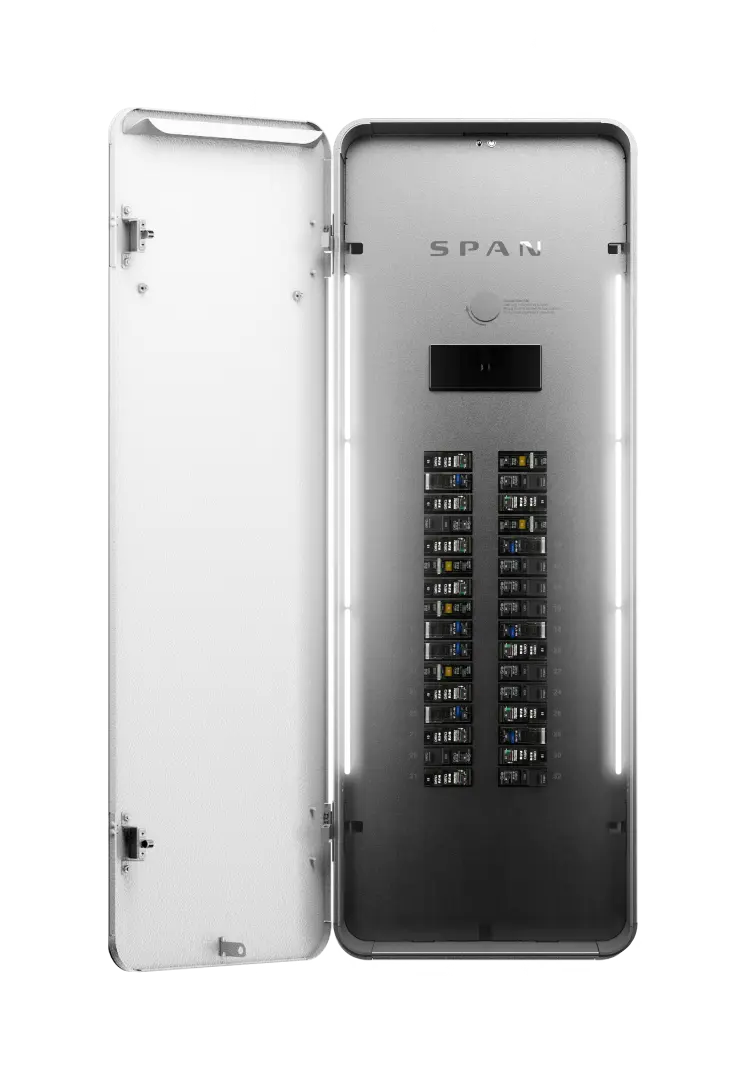
This article is general education, not electrical design or do-it-yourself instructions. A qualified professional must assess the property and applicable requirements.
When an EV charger appears to exceed a home’s available electrical capacity, two phrases often enter the conversation: load management and panel upgrade. They sound like competing versions of the same fix, but they change different things. Load management controls when or how strongly charging operates. Panel or service work changes physical infrastructure, and a panel replacement at the same rating is not the same project as increasing utility service capacity.
The sensible choice begins with the constraint, the driver’s charging requirement and the rest of the home’s electrification plan. A search for an electrician near me can produce several proposals that use the same headline but contain very different work. Ask each provider to show what problem its recommendation solves.
Identify the constraint before discussing a solution
A crowded panel can mean no breaker spaces, limited calculated capacity, obsolete or damaged equipment, an undersized feeder, or simply poor labeling. Those conditions are not interchangeable. The utility service, meter equipment, main disconnect, distribution panel and charger circuit are separate parts of the path, even when they are mounted together.
Have the electrician document the observed equipment, relevant ratings, major loads and the method used to evaluate capacity. Include electric heating, water heating, cooking, air conditioning, pools, workshops, solar, batteries, generators and any existing EV charger. Do not remove covers yourself to collect photographs.
Ask for one sentence that states the limiting condition. “The panel is old” or “EVs need 200 amps” is not enough. The explanation should distinguish condition, capacity, physical space and utility limits so the alternatives can be compared honestly.
Define the charging performance actually required
Record average daily driving, the longest recurring trip, arrival and departure times and how often the vehicle parks at home. A car that sits for twelve hours may recover routine use at a lower power than one available for only four. The vehicle’s onboard AC charging capability also limits what it can accept, regardless of circuit size.
Translate the routine into energy needed during the charging window. Keep unusual road trips separate; public fast charging or an earlier start may be a better exception plan than building the entire home system around a few nights per year.
If a second EV is likely, include its parking and schedule now. The objective is not to install the largest possible circuit. It is to meet repeatable transportation needs while leaving an understandable path for future loads.
Understand what EV load management changes
Load management uses approved controls to limit or pause charging under defined conditions. A system may allocate a fixed power budget among multiple compatible chargers or respond to the home’s demand. Tesla, for example, publishes power-management information for supported Wall Connector arrangements. Other products use their own sensors, controllers and commissioning methods.
This approach can preserve charging access where full simultaneous output is not needed. It does not repair deteriorated equipment, create physical breaker space, correct an unsuitable panel or increase a conductor’s rating. It also does not eliminate the need for a designed charger circuit and professional capacity evaluation.
Ask where measurements are taken, what equipment communicates and how the system behaves if a sensor, network or controller fails. Identify who commissions it, who can change settings and which parts depend on a particular brand or cloud service. A box described only as an “energy saver” is not a complete specification.
Separate panel replacement from service expansion
A panel may be replaced while the service rating stays the same. Reasons can include condition, configuration, available spaces or coordination with other work. A service upgrade can extend beyond the panel to the meter, service conductors, grounding, utility equipment and exterior work. Scope varies by property and utility.
Request a simple one-line drawing or written equipment list showing what changes and what remains. If the proposal says “upgrade to 200A,” ask which components will carry that rating after completion and whether the utility has confirmed its portion. Avoid assuming that a larger label on one enclosure establishes the capacity of the entire supply path.
Infrastructure work may create room for several future projects and remove existing limitations. It can also involve longer approval, shutdown and restoration steps than charger-only work. Those tradeoffs should be described, not hidden behind a single allowance.
Compare the two options against future loads
List major projects expected during the next several years: a second EV, heat pump, electric water heater, induction range, workshop, addition, solar or battery. Note which are likely and which are only possibilities. Load management may coordinate several flexible loads, while an infrastructure project may support a broader redesign. Neither is automatically future-proof.
Consider physical routes and wall space too. A planned remodel may make panel or feeder work easier now. Conversely, replacing service equipment solely for one modest charging need could be unnecessary if an approved managed design meets the goal and other loads are unlikely.
Ask the electrician to show the remaining margin or operating rule after each option. A homeowner should understand what can be added later, what would require reevaluation and whether the chosen controller can expand beyond the first charger.
Evaluate reliability and ownership
Traditional distribution equipment and electronic controls have different maintenance profiles. With load management, record sensor placement, firmware or connectivity needs, indicator meanings and the fallback state. Find out whether charging stops, reduces or continues at a fixed limit after a communication problem.
For panel or service work, document new equipment, labeling, inspection closeout and any utility-owned components still awaiting action. Ask about outage planning and how temporary loss of refrigeration, medical equipment, internet or security will be handled during construction.
In either case, assign support. The electrical contractor should explain what it covers, the manufacturer should cover its stated product support, and the utility controls its side of the service. Keep those contacts with the system diagram so a fault does not become a three-company guessing exercise.
Look at project disruption, not just price
A quote total cannot be interpreted without scope. Load management may require a controller, sensors, communications, configuration and testing. Panel or service work may include utility coordination, permits, meter work, grounding, trenching, wall repair, stucco or siding restoration and a longer outage.
Ask what existing equipment is reused, what is excluded and which discovery would trigger a change order. A proposal should identify permit and inspection responsibility, utility dependencies, finish repair and the number of visits. Do not accept generic promises about approval timing or rebates; verify current programs with the responsible organization.
Compare options over their expected service life without inventing a savings number. Consider replacement support, proprietary components, expansion limits and the value of solving other known electrical issues at the same time.
Require an explanation you can repeat
Before signing, the homeowner should be able to explain the selected design in plain language: “Charging can use up to this approved limit and reduces when household demand rises,” or “The service and panel are being changed to support these documented present and future loads.” If the explanation is only “the software handles it” or “more amps are better,” request more detail.
For Tesla equipment, a Tesla Certified Installer designation may be relevant to product installation and commissioning. Confirm it through Tesla’s current resources and separately verify the electrical contracting credentials applicable to the address. Product familiarity does not replace the authority required to perform electrical work.
Keep the load assessment, equipment schedule and alternative comparison with the quote. That record is useful when another contractor later proposes solar, storage or a second charger.
Commission the chosen design under realistic conditions
A managed installation should be observed with the charger operating and relevant household loads represented according to the installer’s safe test plan. Confirm the configured charging limit, controller status and response to the conditions the system is designed to manage. Do not switch large loads or open equipment yourself for a test.
After panel or service work, review circuit labeling, charger operation, required inspections and any utility closeout. Verify that promised future spaces or pathways are actually documented. Energization alone does not demonstrate that every control, label and approval is complete.
The owner handoff should cover normal operation, approved reset steps, warning indicators and whom to call. Store configuration values and photographs of exterior labels without exposing energized parts.
Revisit the decision when the home changes
Additions, new electric appliances, another EV, solar, battery equipment or changes to service components can affect the original conclusion. Give the next designer the previous assessment instead of asking them to infer it from breaker handles.
Managed charging settings should not be raised casually to obtain faster charging. Likewise, empty spaces in a replacement panel do not by themselves prove additional capacity. Treat a future project as a new system review, using the existing records as a starting point.
Frequently asked questions
Can load management avoid every panel upgrade?
No. It may address a capacity constraint in a suitable design, but it cannot correct damaged or unsuitable equipment, create missing physical space or resolve every service limitation. The property must be assessed.
Is a panel upgrade the same as a service upgrade?
Not necessarily. A panel can be replaced at the existing service rating. Increasing service capacity may involve the meter, conductors, utility facilities and other equipment. The proposal should name each changed component.
Does a managed charger always need internet access?
Requirements vary by product. Ask which functions operate locally, what connectivity is needed for commissioning or features and how the system responds when communication is unavailable.
Will lower charging power damage the EV battery?
Use charging equipment and settings supported by the vehicle and charger manufacturers. The design question is whether the approved rate supplies enough energy during the available window, not whether the circuit is the largest possible.
Should I upgrade now if I plan solar and a battery?
Those plans should be considered together, but do not assume a specific service or panel before the solar and storage architecture is reviewed. Preserve space and records while qualified designers coordinate the phases.
Compare the options for your property
Review electrical panel upgrades or request an assessment with the vehicle, charging schedule, electrical records and future load list. Capacity, provider qualifications and available designs are confirmed for the address.
Sources
Request a property-specific assessment
Share the address, equipment and project goal. The service team can confirm the next step and proposed provider qualifications.
More from the learning center
Continue reading.
Related guides for the next decision.
A Home Energy Project Roadmap: Panel, Charger, Solar and Battery
Sequence a home energy project from goals and load assessment through panel, EV charger, solar, battery, permits, commissioning and expansion.
Read the articleChoosing a Future-Ready Electrical Panel for EVs and Batteries
Plan a future-ready electrical panel for EVs and batteries by evaluating load, spaces, controls, service capacity, backup design and expansion pathways.
Read the articleCombining an EV Charger Installation with a Panel Upgrade
Plan an EV charger and electrical panel project together, compare load-management alternatives and define utility, permit and inspection responsibilities.
Read the article